WindowServe buying guides
Real Wood Blinds: Choosing the Finish, Slats, and Right Room
Real wood blinds bring a visible material into the room, not just a color at the window. Their grain, finish, and horizontal lines can connect with flooring and furniture, or provide a quiet backdrop against painted trim. The right choice balances that appearance with how the room is used and how often you want to raise the blind.
The short answer
Real wood blinds make sense when you value natural grain or a painted hardwood finish and want adjustable slats for everyday privacy. Start with the room's moisture exposure, then compare samples, slat proportions, and controls at the window. Choose the mounting position before finalizing the size. For very damp locations, compare faux wood instead; for a consistently dark bedroom, evaluate the complete light-blocking arrangement rather than relying on closed slats alone.
Before you choose
- Use real finish samples to judge grain and color; a screen image cannot show the full material.
- Confirm the room is suitable for wood before choosing a stain, especially near moisture.
- Treat slat size, mounting clearance, and the way you operate the blind as one decision.
What makes real wood blinds different?
Real wood blinds have individual hardwood slats that tilt for light control and, on liftable configurations, gather above the window when raised. Graber describes its wood range as North American hardwood with paint and stain choices. See Graber's wood blind materials. A wood-colored finish on another material is a different product, so check the construction on the specification.
Look at several slats rather than a single chip when assessing a stain. The attraction of wood is often its variation, but that also means it should not be judged like a uniform printed surface. Ask how much variation is expected in the selected finish and whether the headrail treatment is intended to match or simply coordinate.
Think about the blind in three positions: fully closed, tilted open, and raised. A finish that looks dramatic when closed may become a much smaller accent while open. If you normally leave blinds tilted, that everyday view is more useful than choosing entirely from a photograph of closed slats.
Start with moisture, access, and daily routine
A living room, dining room, or office is a sensible place to begin comparing wood samples. In a bathroom, laundry area, or another consistently humid space, the material choice deserves more scrutiny. Graber advises against real wood in high-humidity situations and points to faux wood as the alternative. Read the manufacturer's comparison.
Room names alone are not enough. A kitchen window across the room from a sink has different exposure from a window behind a faucet. Tell the consultant where steam, splashes, and condensation occur. If wood is unsuitable for one room, you can still coordinate that room with a different material rather than forcing the same product everywhere.
Then consider access. If a sofa prevents reaching the bottom rail, or the window is above a deep worktop, a manual lift system may conflict with how you want to use it. Sketch furniture placement before deciding where the control belongs. Review our faux wood blinds guide when moisture tolerance is the deciding factor.
Painted or stained: how to compare finishes
Use paint to emphasize shape
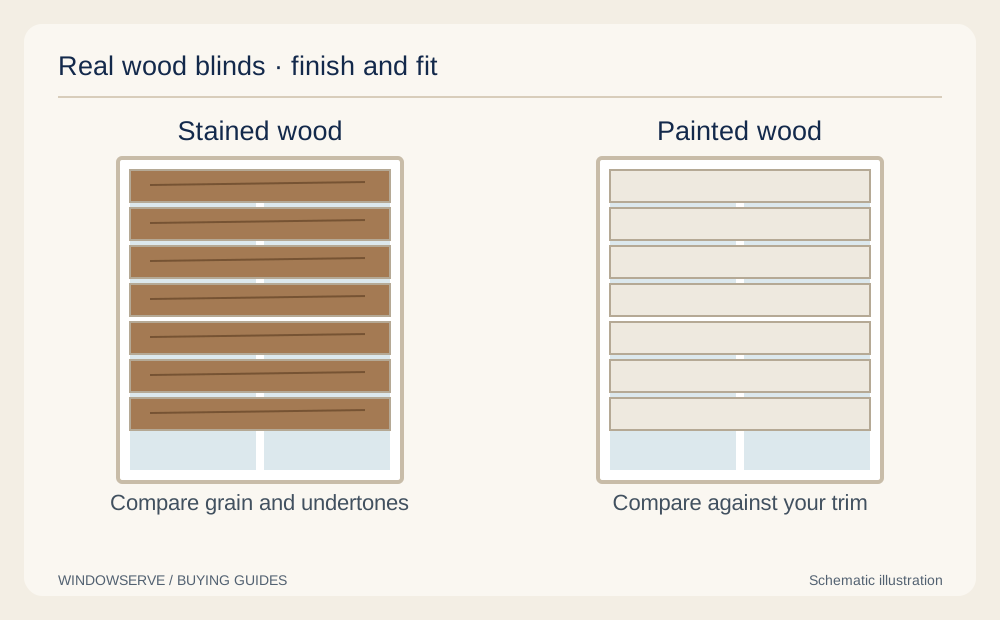
A painted finish can keep attention on the spacing of the slats and the window trim. Compare the blind sample with both the casing and the wall: two whites that look similar on their own can show different undertones side by side. View the sample vertically, in the position the blind will occupy, instead of flat on a counter.
Use stain to bring grain into the room
For a stain, decide which existing wood surface the blind should relate to. You may prefer a tonal connection to a table or cabinet rather than trying to match the floor exactly. Bring samples to the room at different times of day, and check the appearance when interior lights are on.
Choose a rule for connected rooms
In an open floor plan, a consistent finish can help several windows read as a group. In separate rooms, individual finishes may make more sense. Write down the rule before placing the order, particularly when windows appear together from the street. Confirm the outward-facing appearance as well as the room-facing finish.
Select slat proportions and decorative details
Slat width affects the number of horizontal lines across the opening and how much clearance is needed for rotation. Graber currently lists 2-inch and 2⅜-inch hardwood slats in its wood collections. Confirm the sizes available in your chosen collection. A larger slat should be evaluated against the actual window, not chosen simply because the room is large.
| Detail | Question to answer |
|---|---|
| Slat width | Does the spacing suit the window, and can the slats rotate without hitting hardware? |
| Headrail treatment | Should it blend into the trim, stand out as a decorative piece, or remain visually simple? |
| Decorative tapes | Do you want vertical accents across the horizontal slats, and do they suit adjoining windows? |
| Several blinds side by side | Where will the divisions, control points, and gaps fall? |
Ask to see the finish on the headrail covering, bottom rail, and any optional tapes together. A quotation that names only the slat color may leave these smaller but visible decisions unresolved.
Set realistic expectations for light and privacy
Tilting a blind changes the sightline through the slats. It does not create the same experience as an uncovered window, a sheer fabric, or a solid shade. Try several positions while seated and standing in the room. For an office, consider where a monitor sits relative to the window so you can test glare at the position where you work.
Product details can improve closure. Norman describes concealed route holes and tighter closing slats in its wood blind range. See Norman's wood blind privacy features. Even with improved closure, check edge gaps and the installed mounting arrangement before expecting blackout performance.
For nighttime privacy, the important question is what someone can see from the actual neighboring sightline with your room lights on. Do not rely only on how private the room feels during daylight. If a bedroom needs stronger light blocking, compare blackout shades or discuss an additional layer designed for that purpose.
Measure around the window's working parts
An inside mount preserves the frame around the blind, but it needs suitable depth and fixing space. Check locks, cranks, handles, screens, and the path of any opening sash. An outside mount can help when the recess is shallow; its brackets and covering still need room near walls, shelving, or cabinetry.
For a wide opening, ask how one blind compares with multiple independently operated units. The choice affects daily effort, the raised stack, window access, and the appearance of the divisions. Request a simple drawing if the window has several panes or an unusual frame.
Operate the selected system before ordering. Ask whether it raises, tilts, or does both, and whether all functions can be reached comfortably. For homes where children may be present, choose cordless coverings. CPSC recommends cordless for young children's safety. A control demonstration is also the right time to learn what resistance is normal and when to stop rather than force a mechanism.
Plan for care and compare complete quotes
Graber advises against water on wood; follow its wood cleaning instructions.
When comparing prices, include the finished dimensions, wood collection, finish, lift and tilt controls, decorative options, and installation work. A custom finish or several independently operated sections can change a quote. Ask who handles measurements, what happens if hardware interferes, and how future service is arranged. Avoid comparing totals until both proposals describe the same result.
For your Des Moines metro home, WindowServe's free in-home consultation is an opportunity to compare finishes beside your existing woodwork and review the installation details. Browse our blinds collection if you are still deciding between materials.
Common questions about real wood blinds
Are real wood blinds a good choice for bathrooms?
They are generally a poor starting choice for persistently humid or splash-prone locations. Describe the exact conditions and compare a moisture-resistant faux wood product. A bathroom label alone does not establish whether a particular window is suitable.
Will stained wood blinds match my wood floor?
A coordinated appearance is more realistic than assuming an exact match. Compare physical samples against the floor, trim, and furniture, and review expected variation across the finished slats.
Are wood blinds blackout?
Ordinary wood blinds should not be treated as a complete blackout system. Closed slats can leave light at their edges and around the window. Choose the product and mounting details around your actual darkness requirement.
Can I use the same wood blind in every room?
Possibly, but confirm moisture exposure, window sizes, access, and control options for each location. A coordinated mix of materials can be more practical than using one product where it is unsuitable.
Compare options in your own home
WindowServe offers free in-home consultations in the Des Moines metro, with professional measuring and installation for your project. Bring your questions about privacy, light, materials, and fit; we can compare options at your windows.
Request a free consultationSources and product details
Manufacturer references explain particular products and options. Availability, care instructions, and warranty terms depend on the product selected.