WindowServe buying guides
Faux Wood Blinds: How to Choose the Right Material and Fit
Faux wood blinds are worth considering when you want the clean lines of horizontal slats with a material suited to everyday mess and changing room conditions. Choosing well involves more than picking a shade of white: the material, operating system, window size, and mounting depth all affect how the finished blind works.
The short answer
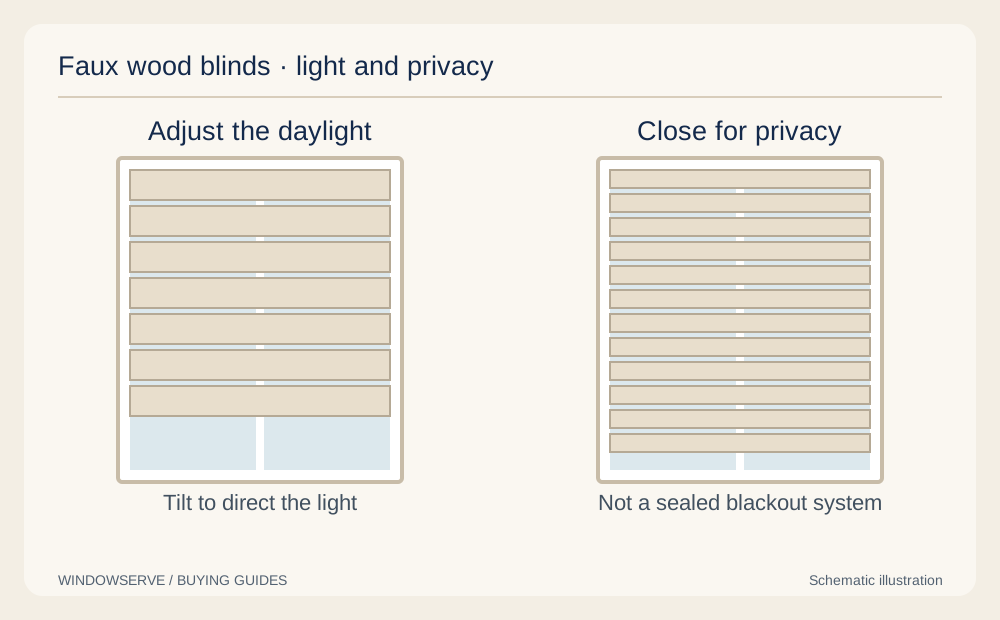
Choose faux wood blinds when adjustable privacy and a wood-style appearance matter, particularly in rooms where moisture makes real wood less suitable. Compare the specific PVC or composite construction, test the lift on a similar-sized sample, and check clearance for the slats. They can reduce light when closed, but they are not a complete blackout system. For a very wide window, discuss separate blinds before assuming one large blind will be easiest to use.
Before you choose
- Check the actual material and approved conditions; faux wood is a category, not one universal specification.
- Choose slat size and mount together so the blind can tilt freely around handles and trim.
- Evaluate privacy, daily lifting, and cleaning access before deciding on color.
What are faux wood blinds made of?
Faux wood blinds use manufactured slats rather than solid hardwood. The label can cover different constructions, so ask for the collection and material on the written quote. Graber distinguishes PVC faux wood slats from polymer composite slats; these are related choices with different weights and design options. See Graber's material descriptions.
That distinction matters more than whether a sample looks convincingly like wood from across the room. Pick it up, look along the edge, and compare a smooth painted finish with an embossed grain. A smooth finish may sit quietly against painted trim, while a pronounced grain can be more noticeable under strong side lighting. Neither appearance tells you the product's maximum size or environmental limits.
Ask whether the quote includes the headrail covering, end returns, brackets, and any decorative tapes shown in the sample. A small display can make an optional detail look standard, and two similar-looking quotes may include different components.
Faux wood or real wood: which fits the room?
The decision usually begins with the room rather than a general ranking of materials. Graber identifies humidity as a key difference and describes real wood as lighter than its faux wood counterpart. Read Graber's wood comparison. Actual weight still depends on the selected construction and finished size.
| Your priority | What to compare |
|---|---|
| A humid bathroom or laundry room | Start with a moisture-resistant material approved for that setting. |
| Visible natural grain | Compare stained real wood with printed or embossed faux wood in the same light. |
| Frequent raising on a large window | Operate a representative sample and review size limits or separate sections. |
| A consistent painted appearance | Compare the actual white or neutral finish against your trim and wall paint. |
A bathroom with occasional humidity is different from a window directly inside a shower. Do not turn a moisture-resistance claim into permission for repeated soaking. Explain where splashes land and whether condensation collects on the glass, then get confirmation for the exact product. For the alternative, read our real wood blinds guide.
Understand privacy and light leakage before buying
A blind lets you change the slat angle without fully uncovering the window. That makes it useful when you want some daylight but do not want an unobstructed view into the room. The useful angle depends on where people outside are standing: a sidewalk below the window and an upstairs neighboring window create different sightlines.
Closed slats can still leave light around the perimeter and at openings in the construction. Norman describes tighter closure and concealed route holes in its SmartPrivacy design, which can reduce those paths; that is a feature of particular products, not a promise that every faux wood blind will darken a bedroom completely. Review Norman's faux wood blind features.
For a bedroom, state the goal plainly: afternoon glare reduction, fewer streetlight distractions, or a substantially darker room for daytime rest. If darkness is the first priority, compare a purpose-selected blackout shade system or discuss an additional drapery layer. Check an installed sample from an outside viewing angle where possible, particularly for a ground-floor room.
Choose slat size, mounting depth, and window divisions together
A wider slat changes the visual rhythm of the blind, but it also needs room to rotate. Graber's current faux wood range lists 2-inch and 2½-inch slats, while its composite range lists 2-inch slats. Check the current product options. Other collections can differ.
Inside mount
Placing the blind within the opening keeps surrounding trim visible. Measure the usable recess, not simply the distance to the glass. Handles, locks, tile, screens, and a projecting sill can limit where the brackets sit or how the slats turn. Minimum mounting depth and fully recessed depth are different measurements.
Outside mount
Mounting above or around the opening can be worth considering when the recess is shallow or when additional coverage is useful. Plan the width and height around the actual obstruction; avoid assuming that extra overlap alone makes the blind blackout. Check the proposed valance projection beside cabinets or adjacent walls.
One blind or separate sections
On a bank of windows, compare one continuous blind with individual units aligned to the window divisions. Separate units let you uncover one opening without raising everything. One continuous unit reduces the number of headrails, but can be less convenient if you repeatedly need access to only one side. Ask the installer to show where any gaps and controls will fall.
Test the controls and plan for cleaning
Before ordering, simulate your normal routine: tilt the slats for breakfast, raise the blind to open the window, and lower it from the position where furniture will actually sit. A cordless lift may be straightforward on a reachable window and inconvenient behind a deep counter. Confirm whether any powered option operates tilt, lift, or both; those functions are not interchangeable.
Choose cordless coverings where children may be present. CPSC identifies cordless as the safest option for young children. Have the installed controls demonstrated and keep the product's operating instructions.
Graber's care chart allows dusting, vacuuming, and spot cleaning for faux wood blinds, not immersion.
What affects the quote?
Useful price comparisons identify the same window size, material, control system, and included installation work. Total cost can change with the number of separate blinds, finish, decorative details, mounting challenges, and any extra hardware. Ask for an itemized specification rather than relying on a generic price per window.
- List which windows you raise daily and which you mainly tilt.
- Photograph handles, nearby cabinets, and furniture that restrict access.
- Compare finish samples against the trim in daylight and under room lighting.
- Confirm material, slat size, controls, mounting position, and headrail treatment.
- Ask what the warranty covers and how a repair or replacement part would be handled.
For a Des Moines metro home, a free in-home consultation with WindowServe lets you compare samples against the actual windows and discuss fit before ordering. You can also return to our blinds collection to compare the other product types.
Common questions about faux wood blinds
Are faux wood blinds waterproof?
Do not assume so from the category name. Moisture resistance varies by material and product, and hardware and operating components also matter. Describe any direct spray or persistent condensation and confirm that the manufacturer approves the complete blind for those conditions.
Can faux wood blinds make a bedroom completely dark?
They reduce incoming light when closed, but perimeter gaps and the slat construction can still admit light. If a very dark bedroom is your main goal, compare a blackout shade with suitable mounting details or discuss layering.
Is one wide blind better than two smaller blinds?
It depends on how you use the window. Separate blinds can make daily lifting and individual window access easier, while one blind creates a more continuous appearance. Check the selected product's size limits, weight, controls, and gap locations before deciding.
Should faux wood blinds match the trim exactly?
They do not have to. An intentional contrast can work well, while a near-match may look different under daylight. Compare full samples in the room and decide whether you want the blind to blend into the trim or stand apart.
Compare options in your own home
WindowServe offers free in-home consultations in the Des Moines metro, with professional measuring and installation for your project. Bring your questions about privacy, light, materials, and fit; we can compare options at your windows.
Request a free consultationSources and product details
Manufacturer references explain particular products and options. Availability, care instructions, and warranty terms depend on the product selected.