WindowServe buying guides
How to Choose Plantation Shutters
Plantation shutters can give a window a finished, built-in appearance, but choosing them involves more than picking a shade of white. The material, frame, louver width, and panel arrangement all change how the treatment looks and works. This buying guide helps you compare those decisions before ordering custom shutters for a living room, bedroom, or other space.
The short answer
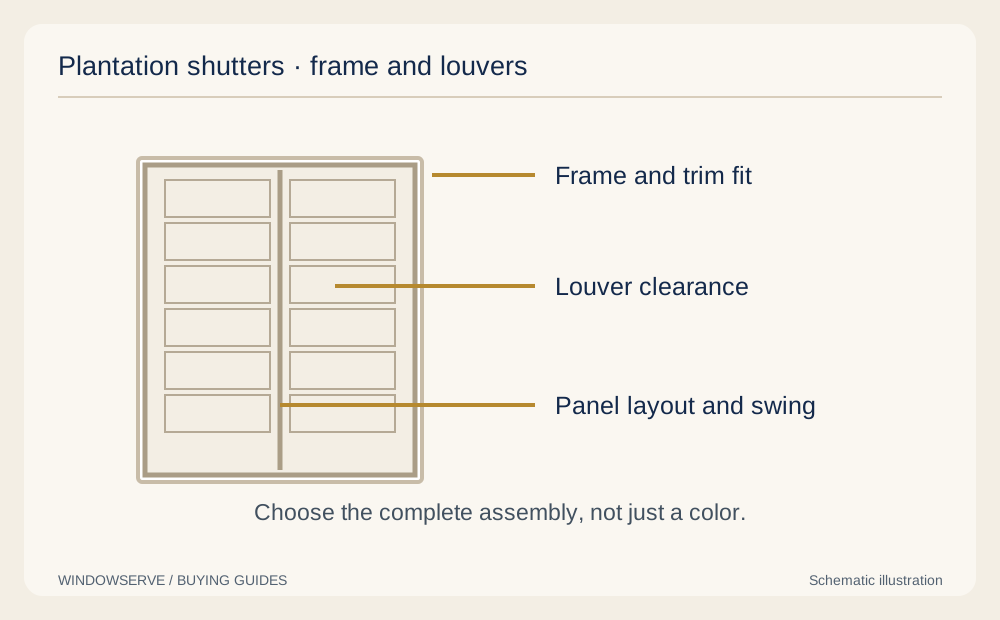
Choose plantation shutters by working from the window outward: check moisture exposure and operating clearance, select an appropriate material, then compare louvers and frames at the actual window. Plan where panels will swing and how much privacy you need when louvers are tilted. A sample that looks attractive on a table may behave differently beside a crank handle or deep sill. Confirm the complete layout, finish, and installation details in writing before ordering.
Before you choose
- Material suitability depends on the room and exact product construction, not just the label “wood” or “poly.”
- Louver width, frame depth, and panel divisions need to be considered together.
- Split tilt adjusts separate louver sections; it does not necessarily mean separate opening panels.
What are plantation shutters?
Plantation shutters are interior shutters with adjustable horizontal louvers held in rigid panels. The louvers tilt to change light and sightlines, while hinged panels can open for access to the window. The term describes a familiar shutter style rather than a single material or construction method. A plantation shutter can be wood, composite, or a manufacturer-specific hybrid.
Unlike a shade that rolls up into a headrail, shutters remain visible around the glass even with the louvers open. That is part of their appeal, but it also makes the layout important. Decide whether you want the shutter to become an architectural feature or whether preserving the greatest possible clear glass area matters more.
Compare wood, composite, and hybrid construction
Wood is worth considering when the grain, stain, or relationship to existing woodwork is central to the room. Composite and hybrid options deserve attention when painted finishes and room conditions are the priority. These categories are broad: different products can use different materials in their louvers, rails, and frames. Ask what the complete assembly contains.
For example, Graber’s wood shutter information identifies hardwood construction and painted or stained finishes. Its composite collection is described as suitable for moisture and high humidity. Those descriptions apply to those products; they do not make every composite shutter suitable for direct shower spray.
Compare a full corner or panel sample if possible. Look at the edges, surface texture, hinge color, and frame detail, then place it beside your trim. The material decision should solve a practical requirement as well as a decorating one.
Choose louver size with a window-side demonstration
Louver width influences the rhythm of horizontal lines and the view between them. Smaller louvers produce a finer pattern; larger louvers produce a broader pattern. Avoid choosing solely from the size of the room. The dimensions of the window, the number of panels, your usual viewing position, and available clearance all matter.
Common options include 2½-, 3½-, and 4½-inch louvers, although choices differ by collection. Norman’s Woodlore Plus specifications, for example, list additional sizes and several frame choices. Product availability should be confirmed for your particular order.
Try a sample at eye level while seated and standing. Tilt it through its full travel. A larger louver that looks good when open is only useful if it can rotate without hitting glass, a lock, or a window crank. Request a drawing if there is any uncertainty about the setback.
Decide how the frame should meet your trim
A shutter frame is a visible part of the finished treatment, not merely an installation accessory. Look at its width, profile, and position relative to the casing. A frame that overlaps the opening creates a different effect from one sitting within it. Existing decorative trim may deserve to remain visible; a simple drywall opening may benefit from a more defined border.
Bring up shallow depth, projecting handles, tile returns, and uneven openings during measurement. A frame cannot be selected reliably from a front-facing photograph alone. Ask the installer to explain the proposed mounting surface and whether the solution projects beyond the existing trim. Review both a front view and a side view before approving the order.
Balance open views with manageable panels
One wide panel and two narrower panels can give the same window very different proportions. Fewer divisions may simplify the view, but the permitted panel size depends on the selected product. The open panel also needs somewhere to go. A sofa arm, bedside lamp, faucet, or adjacent wall can turn an appealing drawing into an awkward daily routine.
Map the movement, not just the closed appearance. Which side should each panel hinge from? Will it open far enough to clean the glass? Does it interfere with an adjoining shutter? On a group of windows, look at the combined arrangement from across the room before approving individual measurements.
For bay windows, French doors, or unusual shapes, read the interior shutter layout guide before selecting a standard rectangular configuration.
Understand tilt controls and privacy zones
With a front tilt rod, the control is visible across the louvers. Hidden or rear controls give the panel a different visual finish. Try the actual mechanism, especially if someone in the household finds small components difficult to grasp. Ease of adjustment matters more than choosing the least visible hardware.
Split tilt lets upper and lower groups of louvers adjust independently. Separate upper and lower hinged panels are a different configuration. Graber’s interior shutter guide explains these layout and control terms. Ask the quote to identify which arrangement it includes.
For a street-facing room, consider where a person outside can see in when you are seated. Closing the lower louvers and opening the upper group may suit daytime use, but check sightlines from the relevant angle and again after dark.
Set realistic expectations for bedroom darkness
Adjustable louvers make shutters useful for changing light through the day, but ordinary shutters should not automatically be treated as a blackout system. Light can remain visible at panel edges, meeting points, and around the frame. The result depends on construction, fit, outside brightness, and installation.
If your priority is a dark bedroom, describe that requirement before choosing a product. Ask to see the exact shutter’s closure and available light-management options. A coordinated shade or drapery layer may be worth discussing. Evaluate the full assembly rather than assuming a darker paint finish will solve perimeter light. A color sample does not show how an installed window treatment performs at sunrise.
Compare maintenance and the complete quote
Ask for the care instructions for the selected material and finish. Cleaning rules can differ, and a convenient household spray may not be approved for the surface. Graber’s shutter cleaning guidance distinguishes routine dust removal from more involved cleaning and cautions against soaking wood shutters.
When comparing prices, match the specifications first: material, finish, frame, panel count, louver size, tilt controls, and any specialty work. Also check whether measuring, installation, removal of old treatments, and service terms are included. A lower total is not a meaningful comparison if it describes a different panel layout.
Request the written product warranty and installation terms separately. Keep the approved drawing and order details with your receipt so future questions refer to the actual product supplied.
A practical checklist before you order
- View the finish against your existing trim in daylight and evening lighting.
- Demonstrate the proposed louver width and full tilt movement at the window.
- Confirm every panel’s hinge direction and available swing space.
- Decide whether privacy requires split tilt, separate panels, or another treatment.
- Identify any damp conditions, direct water exposure, or hard-to-reach controls.
- Review the final frame, dimensions, price inclusions, and care instructions.
Consider a bedroom with a narrow nightstand beside the window. A wide opening panel may look calm when closed but be inconvenient to swing past the lamp. A different panel division could make access simpler. Working through such ordinary situations is more useful than selecting from a styled photograph alone.
Plan plantation shutters for your Des Moines home
Start with the room that has the clearest need: street-facing privacy, a coordinated trim finish, or a particular window shape. You do not have to make every room identical. A consistent color can connect spaces while material and panel choices respond to different conditions.
Explore WindowServe’s shutter options and plantation shutter service in Des Moines. For help comparing samples, clearances, and layouts in your own rooms, request a free in-home consultation. Bring your questions and any renovation plans so the proposed shutters fit the finished space, not just the window as it is today.
Common questions about plantation shutters
Are plantation shutters and interior shutters different products?
Plantation shutters are a style of interior shutter. Interior shutters is the broader category, which can include different louver sizes, panel arrangements, and specialty shapes. Compare the actual construction and configuration rather than treating those two names as opposing choices.
Which plantation shutter louver size is best?
There is no universal best size. Compare the appearance, view, and full operating clearance of the available louvers at your window. Window depth, handles, panel divisions, and your seated sightline can matter as much as the width of the glass.
Can plantation shutters make a bedroom completely dark?
Standard shutters can reduce incoming light, but light may remain around frames and between components. If darkness is essential, evaluate the exact system’s closure and any additional shade or drapery layer before ordering.
Do all windows in a house need matching shutters?
No. You can coordinate color and frame style while adapting panel layouts or materials to different rooms. Review windows that are visible together as a group, and choose moisture suitability and access before forcing an identical specification everywhere.
Compare options in your own home
WindowServe offers free in-home consultations in the Des Moines metro, with professional measuring and installation for your project. Bring your questions about privacy, light, materials, and fit; we can compare options at your windows.
Plantation shutters in Des Moines
Request a free consultationSources and product details
Manufacturer references explain particular products and options. Availability, care instructions, and warranty terms depend on the product selected.