WindowServe buying guides
How to Choose Solar Shades
Solar shades can make a bright room more comfortable without completely giving up the view. Their open-weave fabric is also the reason they need careful privacy planning. The best choice starts with the specific problem at your window: screen glare, intense sun, an exposed room after dark, or some combination of those needs.
The short answer
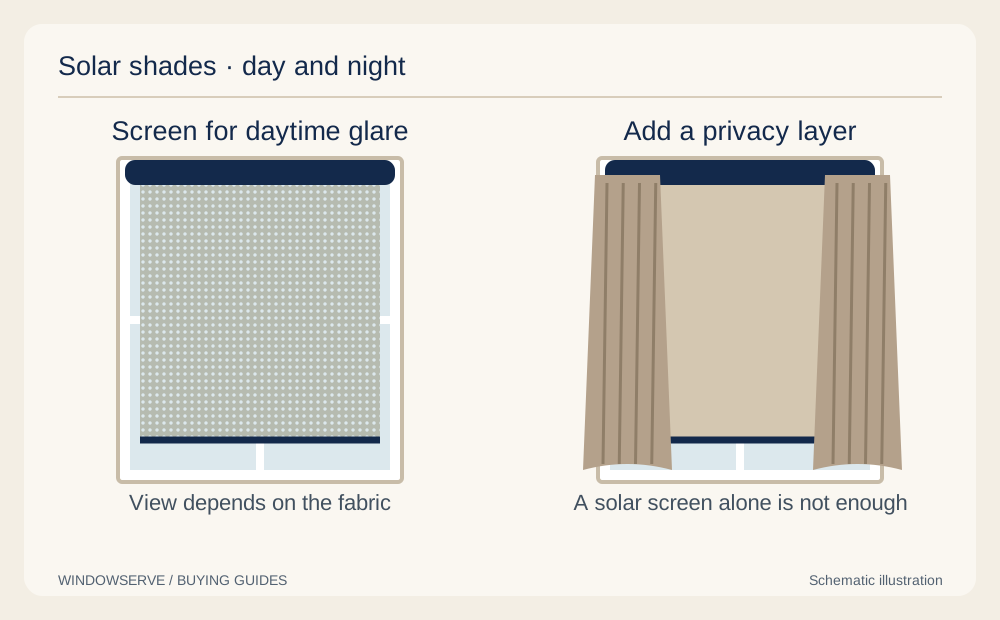
Choose solar shades when you want to filter sunlight while retaining some view through the fabric. Compare openness and color using samples at the actual window; lower openness generally favors stronger screening, while higher openness favors the view. Solar shades are not a reliable standalone nighttime privacy treatment. If people can see your windows after dark, plan an opaque second layer. Confirm UV and solar-performance data for the exact fabric instead of treating openness as a universal protection percentage.
Before you choose
- Solar shades manage sunlight and view; they should not be your only nighttime privacy layer.
- Openness, visible-light transmission, UV transmission, and heat performance are different specifications.
- Evaluate samples from the position where glare bothers you, with a separate check after dark.
Solar shades versus ordinary roller shades
A solar shade commonly uses a roller mechanism with a screen-like woven fabric. Roller describes how the treatment moves; solar describes the kind of screening fabric and its intended sunlight-management role. An opaque roller shade can use similar hardware while doing a very different job at the window.
If you like seeing trees or a garden while the shade is down, a screen fabric is worth comparing. If your first priority is hiding the interior at night or making a bedroom dark, begin with a privacy or blackout fabric instead, or plan two layers from the start.
A useful purchasing question is, “What do I want to see through this window when the shade is lowered?” Answer it for daylight and nighttime separately. That avoids buying a product for one favorable daytime demonstration and discovering that it cannot meet the room's evening needs.
What openness percentage means
Openness describes the proportion of open area in a screen weave. A lower number generally means a tighter screen; a higher number leaves more open space for view-through. Graber offers multiple openness options, illustrating the tradeoff between screening and visibility.
Do not treat an openness label as a complete UV or heat-performance rating. Ask for the manufacturer's data for the exact fabric and color, including UV transmission when protection is a priority. Phifer's technical data lists openness, visible-light transmission, and UV transmission separately, demonstrating why these should not be treated as the same measure. The number alone cannot tell you how the whole room will feel or how a particular monitor will look.
| Your priority | Sample comparison | Important limit |
|---|---|---|
| Stronger screening | Compare lower-openness fabrics at the problem window. | The view may become less clear; glare still needs an actual-room check. |
| Retaining the view | Compare more open fabrics from your usual seat. | More visibility is not the same as more privacy. |
| Protecting a sensitive furnishing | Request product-specific UV and solar data. | No fabric eliminates every cause of fading. |
The nighttime privacy limitation to understand first
A solar screen is not one-way glass. When a room is brightly lit and it is dark outdoors, people outside may see through the fabric. A low-openness screen still should not be treated as an opaque privacy covering. Bali's manufacturer guidance on solar shade privacy explains why another treatment may be needed after dark.
Make nighttime privacy a separate line on your selection checklist. Which windows face a sidewalk, neighboring property, shared courtyard, or driveway? Which rooms are used for changing clothes or bathing? A view you consider private by day may become exposed as the lighting changes.
Consider an opaque roller shade in a compatible dual system or drapery that actually closes across the opening. Decorative side panels alone do not cover the glass. Make sure the second layer can be operated conveniently, because a privacy solution that stays open is not useful when you need it.
Fabric color affects the view as well as the decor
The shade's color influences how you perceive the outside scene. Hunter Douglas's solar shade guide explains that darker fabrics can favor view-through and glare control, while lighter fabrics reflect more light and may appear hazier. Evaluate the actual material instead of applying that general tendency as a guarantee.
Try a light and dark sample at the same openness before narrowing the palette. View them from across the room as well as close to the glass. If your furniture and walls are pale, a dark shade may be visually noticeable indoors even when it makes the outdoor scene easier to see.
Also inspect the exterior-facing side. For a row of front windows, consistency may matter to you even if individual rooms have different colors. Ask what the chosen fabric looks like from outdoors and whether any property requirements apply before approving the order.
A practical glare test for a home office
Glare depends on the relationship between the sun, glass, screen, and where you sit. The same fabric may feel comfortable at one desk and insufficient at another. A product photograph cannot reproduce your monitor angle or the time of day when reflections become distracting.
- Record when the glare happens and which window causes it.
- Compare candidate samples at that window during the troublesome period.
- Use the screen as you normally would rather than turning it off for the test.
- Check both the screen reflection and brightness around it.
- Consider whether a small desk or screen-position adjustment improves the result.
As a hypothetical example, a home office overlooking a yard might use solar fabric during working hours and a closing privacy layer in the evening. Another office facing a nearby building may favor an opaque material instead. Choose for the actual sightlines rather than assuming all offices need the same openness.
Set realistic expectations for UV and heat
Solar fabrics can reduce exposure to sunlight, but a protection claim needs a defined product and measurement. Ask which test or data sheet supports a stated UV percentage and whether it applies to your selected color. Keep that information with the quote rather than relying on a general category description.
Window treatment choices also interact with glass, window size, orientation, and the rest of the room. A solar shade is not a replacement for fixing a damaged window or addressing an undersized cooling system. Avoid choosing one solely from an advertised savings figure that has not been evaluated for your home.
If protecting an artwork or unusually sensitive material is the main concern, identify that object during the consultation and consider placement as well as shading. Even when less UV reaches the room, other light exposure and environmental factors still matter. The useful goal is managing exposure, not promising that furnishings will never change.
Plan mounting, width, and a second layer together
Solar roller hardware takes up space beyond the fabric itself. Discuss the finished fabric width, side gaps, mounting depth, and clearance around handles. At a wide opening, compare a single panel with multiple aligned shades and identify where the divisions will fall.
If you need a second privacy layer, check the total depth of the arrangement before ordering either treatment. A dual roller assembly, a separate inner shade, and drapery each use space differently. Confirm that the window can still open and that one treatment does not rub against the other.
Ask to see a side view of the proposed installation. It should show brackets, top treatment, fabric positions, and any rod projection. This simple review is especially valuable on shallow recesses, bay windows, and windows close to cabinetry. The desired daytime view is only part of a successful installation; access and clearance matter too.
Controls, care, and safe everyday use
For a reachable window, compare a cordless lift you can comfortably operate. For a wall of glass or windows behind furniture, a motorized option may reduce the effort of adjusting each shade. Clarify the power and control package before choosing schedules or smart-home features.
CPSC recommends cordless coverings where children live or visit. Include the entire installation in the safety discussion.
Check Graber's care chart for cleaning methods approved for your screen.
Keep plants, desk accessories, and nearby objects clear of the bottom rail. Before using a shade near an open door or a space exposed to weather, confirm that the product is designed for that application. Interior and exterior solar shades are separate specifications, not interchangeable labels.
What to compare in your solar shade quote
Ask for the exact fabric, color, openness, overall dimensions, lift system, and top finish. Include the second privacy layer if one is needed, so the quote represents a complete solution. An initially cheaper screen-only proposal is not comparable with a system that also meets your nighttime requirements.
Useful upgrades depend on the room. In an office, better glare management may matter more than a decorative valance. In a living room, independent control across several windows may be valuable. At a hard-to-reach opening, motorization needs a practical charging plan rather than just a remote.
Bring your priorities to a WindowServe in-home consultation in the Des Moines metro. Comparing samples in the actual window helps settle the balance of view, glare, and evening privacy before a custom shade is ordered.
Common questions about solar shades
Can you see through solar shades at night?
Yes, people outside may see a lit interior through solar fabric. Do not rely on a solar shade alone for nighttime privacy. Plan an opaque second shade or closing drapery when the room needs it.
Does 5% openness mean exactly 95% UV protection?
Do not infer a universal UV rating from openness alone. Openness describes the weave's open area. Use the manufacturer's performance data for the exact fabric and color when comparing UV transmission or protection claims.
Are solar shades blackout shades?
No. Solar fabric intentionally retains some view-through and daylight. For stronger darkness, choose a suitable opaque fabric and evaluate edge gaps, or combine a solar shade with a separate room-darkening layer.
What openness is best for a home office?
There is no single percentage that fits every office. Compare samples at the window when glare occurs, from your working position, and decide how much outside view you want to retain. Check nighttime privacy separately.
Compare options in your own home
WindowServe offers free in-home consultations in the Des Moines metro, with professional measuring and installation for your project. Bring your questions about privacy, light, materials, and fit; we can compare options at your windows.
Explore custom roller and solar shade options
Request a free consultationSources and product details
Manufacturer references explain particular products and options. Availability, care instructions, and warranty terms depend on the product selected.