WindowServe buying guides
How to Choose Custom Drapery
Custom drapery brings fabric, movement, and proportion into a room. The best choice is more than a pretty swatch: it should open comfortably, provide the intended coverage, and hang correctly on suitable hardware. This guide walks through the decisions that shape the finished result, from stationary side panels to fully functioning drapes.
The short answer
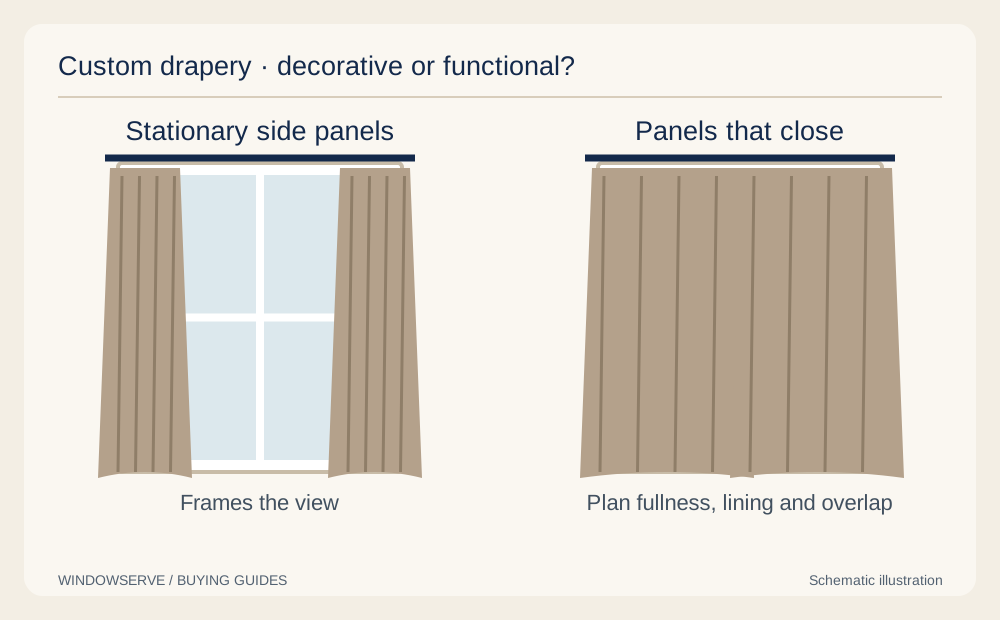
Decide first whether the drapery must close across the window or serve as decorative side panels. Then select the fabric and lining for your light and privacy needs, coordinate the heading with its hardware, and allow space for the fabric when open. Finalize rod position before measuring the finished length. Review a sample in your room and ask the quote to specify coverage, fullness, lining, hardware, and installation so the complete design is clear.
Before you choose
- Stationary side panels frame a window but may not be designed to close across it.
- Lining, overlap, and side coverage matter as well as the face fabric when controlling light.
- Choose heading and hardware together, then finalize dimensions and fabric quantity.
Start with functioning drapery or decorative side panels
Functioning drapery is designed to travel across the opening. Stationary side panels stay in position and add a fabric border. The distinction affects fabric quantity, hardware, space beside the glass, and what the treatment can do for privacy. Do not assume an attractive pair of panels is wide enough to close.
Hunter Douglas’s drapery buying guide makes the same distinction between operating drapery and decorative side panels. Decide which job you need before comparing fabrics.
For a living room with an existing privacy shade, stationary panels may provide the visual finish you want. For a bedroom where the drapery must be the main evening covering, specify full closure. If you want both, describe which layer you expect to operate each day.
Judge fabric as a hanging surface, not just a small swatch
Color is only part of a fabric’s effect. Look at texture, pattern scale, sheen, and how the material folds. A fabric held flat against a table can look very different when gathered vertically beside a bright window. View it with the intended lining behind it when possible.
Ask for enough of the pattern to understand its repeat. A tiny sample may show only one color from a larger design. Then place it near the sofa, flooring, and wall color, checking daylight and your usual evening lighting. Photographing the combination can help you compare options, but make the final color decision from the actual material.
Graber’s fabric drapery collection illustrates the range from sheers and linen options to velvet and patterned fabrics. Availability and construction choices should be confirmed for the particular design you select.
Choose lining around privacy and light control
Ask what the proposed lining is intended to do. A lining selected for body and appearance may differ from one selected for greater light blockage. Also review how the lining changes the weight, folds, and appearance of the face fabric.
Do not judge nighttime privacy from a daytime sample alone. Hold the proposed combination against a light source and discuss the level of screening you need. A sheer daytime layer can be useful for atmosphere, but it should not be assumed to provide private evening coverage.
For a bedroom, evaluate the complete installation. Even a light-blocking fabric leaves opportunities for light around the top, sides, bottom, and center. Ask about returns toward the wall, center overlap, and any underlying shade. The label attached to the lining does not describe every gap around the finished window.
Match the heading to how the drapery moves
The heading is the construction at the top of the fabric. Pleated headings, grommets, and ripple-style systems give different folds and use different supporting components. Choose the look and operating method together rather than ordering panels and hoping they suit a rod selected later.
Try a working sample if the drapery will move daily. Notice the effort needed to open it, whether the folds remain orderly, and where your hand or baton reaches. Ask whether the selected heading can travel through the entire span of the proposed hardware without interference.
For a wide room opening, a track may be worth comparing with a decorative pole. For a decorative panel that never moves, a different arrangement may be sufficient. See the curtain rods and hardware guide for the support and compatibility questions.
Understand fullness, finished width, and fabric quantity
Fullness describes the relationship between the amount of fabric and the width it is arranged to cover. More fabric creates a different fold pattern and a larger stack when opened. The appropriate amount depends on the heading, fabric behavior, and desired appearance, so a single universal multiplier is not a reliable specification.
Ask what “width” means on the quote. Is it the flat fabric width, the finished pleated width, or the space the installed pair is intended to cover? Those numbers answer different questions. The order should make the intended coverage unambiguous.
Also ask how seams and pattern matching are planned. A large repeat may affect fabric requirements even when the window dimensions stay the same. Approve the visual arrangement and finished coverage rather than judging value solely by the number of panels.
Leave room for the drapery when it is open
Open drapery still occupies space. The gathered fabric at either side is often called the stack. If the rod ends just beyond the glass, the open panels may continue covering part of the view. Extending the treatment farther onto the wall may help, provided there is room and suitable support.
Measure the whole wall area, including corners, adjacent doors, artwork, and furniture. Ask for an estimate of the open stack with your chosen fabric, lining, and heading. Avoid relying on a photograph of a lighter or differently constructed panel.
For example, a wide picture window beside a narrow wall return might work better with an asymmetric opening plan than two equally sized stacks. Discuss the result while open and closed; symmetry in one position should not hide a practical problem in the other.
Set the rod position before choosing finished length
Drapery length begins at its actual hanging point, which depends on the hardware and heading. Finalize that location before ordering. The floor may also vary across the opening, so a measurement taken at only one side can miss a difference that becomes visible when the hem is installed.
Choose the hem position around room use. Fabric that stops clear of the floor makes a different visual statement from fabric that lightly meets it or intentionally pools. In a frequently used doorway, a generous puddle may become an obstacle rather than a feature.
Account for vents, heating equipment, and other fixtures, following their clearance requirements. If flooring will change, delay the final length decision until the finished height is known. A carefully chosen fabric cannot compensate for a hanging length based on an unfinished room.
Give each layer a purpose
A useful layered window has a clear job for each treatment. A shade might provide daily privacy while drapery adds softness and evening coverage. A sheer inner curtain might stay drawn during the day while an opaque outer layer closes later. Write down the routine you want before adding more components.
Layers need enough depth to operate independently. Check the path of shade fabric, drapery folds, handles, and any projecting valance. If one layer catches another, the combination may become frustrating even though each product works well alone.
Compare a Roman shade for a fabric treatment held closer to the window, or explore valances and cornices when your main goal is a finished top edge. More layers are not automatically a better solution.
Check care, service, and the complete cost
Confirm cleaning requirements before choosing fabric; see Graber's fabric care guidance.
Request a quote that separates fabric and fabrication from hardware and installation where practical. Confirm lining, heading, finished coverage, tiebacks or batons, and any removal of existing treatments. If a price changes when the fabric changes, ask whether that comes from fabric cost, pattern requirements, or construction.
Keep a record of the selected fabric and approved specification. If a coordinating shade or cushion is planned later, discussing it now can prevent assumptions about future availability or a perfect color match.
Make the consultation about your daily routine
Bring a few inspiration photos, but also list the practical requirements: who opens the drapes, when privacy matters, what must stay accessible, and how much glass you want visible during the day. These details help narrow the choices more effectively than a long list of unrelated fabric samples.
Explore WindowServe’s drapery and hardware options. For a Des Moines-area home, a free in-home consultation lets you compare materials against your own light, walls, and furnishings. The goal is a complete window design with clear specifications for how it looks, hangs, and operates.
Common questions about custom drapery
Are custom drapery panels always made to close?
No. Stationary side panels can be designed solely to frame the window. If you need full coverage, specify functioning drapery and confirm the finished width, center closure, side returns, and compatible hardware.
What is drapery fullness?
Fullness describes how much fabric is arranged across the finished coverage width. It affects the fold pattern and the space occupied when the drapery is open. The right specification depends on the fabric and heading, rather than one multiplier for every design.
Does blackout lining guarantee a completely dark room?
No. A lining can block light through the fabric while light still enters around the installed treatment. Evaluate top and side gaps, center overlap, hem position, and whether another layer is needed for your room.
Should drapes touch the floor?
That is a design and maintenance choice. Consider movement through the room, cleaning, floor variation, and nearby equipment. Set the actual rod and hanging point before finalizing the hem position and finished length.
Compare options in your own home
WindowServe offers free in-home consultations in the Des Moines metro, with professional measuring and installation for your project. Bring your questions about privacy, light, materials, and fit; we can compare options at your windows.
Request a free consultationSources and product details
Manufacturer references explain particular products and options. Availability, care instructions, and warranty terms depend on the product selected.