WindowServe buying guides
How to Choose Roller Shades
Roller shades look simple because the fabric rolls onto a tube instead of gathering into folds. That clean appearance can hide important choices: how much light the fabric transmits, how wide the fabric is relative to the hardware, and what you will see at the sides. Choose the light-control result first, then refine the color, finish, and operation.
The short answer
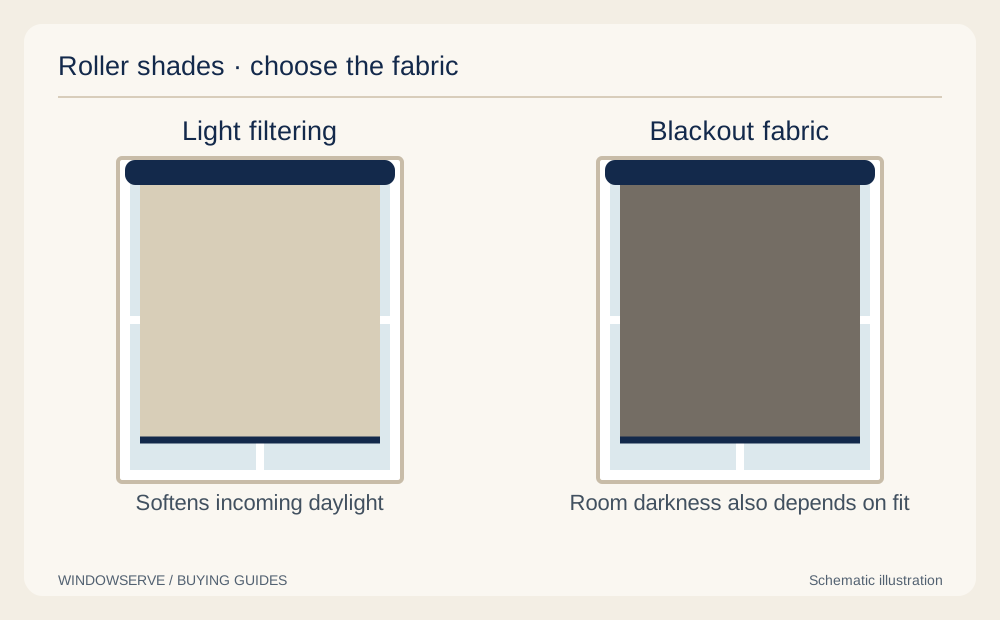
Start with the room's main need: filtered daylight, a view with glare reduction, or stronger room darkening. Those needs lead to different roller fabrics. Then confirm the mounting depth, fabric edge gaps, roll direction, and controls. A cassette can finish the top neatly, but it does not automatically close side gaps. Evaluate samples at the actual window and ask for the final fabric width, not just the overall shade width, before approving an order.
Before you choose
- Roller describes the mechanism; light-filtering, solar, and blackout describe different fabric functions.
- Hardware width and fabric width are different measurements, which matters for privacy and darkness.
- A sample viewed against the window is more useful than a color swatch viewed flat on a table.
What roller shades do well—and where they compromise
A roller shade can give a room a visually quiet window treatment. Raised, it leaves a relatively compact roll near the top. Lowered, it presents a broad field of fabric rather than a series of slats. It can work with simple trim, layered drapery, or a more decorative textile, depending on the material selected.
The compromise is that you generally raise or lower the shade to change coverage; you cannot tilt the material to redirect light as you would with a blind. A single fabric also has one basic level of transparency. If you want an open daytime view and opaque nighttime coverage, plan a second layer or a compatible dual-shade arrangement.
Norman's roller shade overview separates light-control fabrics, lift systems, and light-guard options. Treat those as individual decisions rather than assuming every roller shade includes the same features.
Match the fabric to the room's job
| Fabric direction | Useful starting point | Question to resolve |
|---|---|---|
| Light filtering | Soft daylight in a living or dining space. | What can be seen through it after dark? |
| Solar screen | Glare management while keeping some outward view. | What separate treatment will provide nighttime privacy? |
| Blackout or room darkening | Bedrooms, projection rooms, or strong light sensitivity. | How will light around the fabric edges be reduced? |
These labels are a starting point, not a substitute for inspecting the actual fabric. Two materials marketed as light filtering may transmit different amounts of light and reveal different silhouettes. Ask for the manufacturer's opacity description and look at the reverse side as well as the room-facing color.
If the screen is the main problem, note whether you need to see outdoors during work or simply want comfortable screen viewing. That distinction helps you compare a solar screen fabric with a more private roller material.
A useful five-minute fabric test
Place each candidate sample against the same window instead of comparing them in different rooms. View it with the light behind it, then step back to the distance from which you normally see that window. Hold it beside the wall, trim, and major furnishings. A color that feels warm on a sample card can look different when daylight passes through it.
- Check the sample during the hours when glare bothers you.
- Stand where you normally watch television or use a computer.
- Look at its texture and transparency from close up and across the room.
- Repeat with indoor lights on when privacy matters.
- Ask what changes at full width, including any seams or pattern direction.
A small swatch cannot demonstrate an installed shade's edge gaps or full-room darkness. Use it to narrow fabric choices, then discuss a display or installation detail for the complete system. Photographing samples can help you remember finalists, but phone exposure may disguise the actual light difference.
Understand fabric width and side gaps
The overall width of a roller shade includes its brackets and operating components. The fabric generally sits within that assembly. An inside-mounted shade therefore needs working space that can leave visible light at the sides. Ordering a larger fabric by guesswork is not the solution; the roller still needs to operate freely.
For a bedroom, ask the installer to identify where light could enter at the top, bottom, and edges. An outside mount with planned overlap may help, while a compatible channel system addresses gaps differently. Check how far the fabric projects from the wall, because overlap alone does not describe the angle from which light or a sightline can pass.
For ordinary living-room privacy, a modest gap may be acceptable. For a street-facing changing area, it deserves closer evaluation. Tell the measurer which situation applies instead of expecting every custom shade to deliver the same level of enclosure.
Roll direction, cassettes, and valances
Roll direction changes where the fabric drops relative to the tube. That can influence its distance from the glass and its ability to clear protruding handles. Ask to see a side-view example of the proposed arrangement; a front-facing photograph does not show the clearance.
An exposed roll is visually straightforward. A cassette or valance covers the top assembly and can coordinate with the fabric or surrounding trim. Compare its projection and height, especially on shallow openings, bay windows, or a row of windows with limited wall space. A decorative top treatment should not interfere with opening the sash or removing a screen.
Norman's Soluna collection includes several top treatments and configurations. Exact combinations vary, so ask for the selected finish on the written quote. Do not assume a cassette shown in an inspiration photograph is part of the base specification.
One wide shade or several smaller shades?
Across a broad opening, one shade gives a continuous fabric field, while separate shades allow independent coverage. The useful question is how you use the opening. You might want to cover a television-side window while leaving a neighboring view open, or operate a door panel without raising everything else.
Ask about the permissible dimensions for the exact fabric, tube, and lift system. A material available for a small window is not necessarily suitable as one extra-wide piece. Compare the placement of brackets and gaps with the window mullions so the visual divisions feel intentional.
As a planning example, a living room with three separate windows might use three aligned shades, each operated independently. A single uninterrupted picture window may favor another layout. Neither is universally better; daylight, access, fabric limits, and how much visible division you will accept decide the arrangement.
Choose manual or motorized operation
For an accessible window, a well-matched cordless lift may be all you need. Test it at the reach and height you will use at home. A mechanism that feels easy on a tabletop demonstration may be awkward behind a deep counter or sofa.
Motorization is worth comparing when several shades need frequent adjustment or an opening is difficult to reach. Decide whether a simple remote is sufficient before paying for connected features. Ask where charging or power connections will be accessed, which controls are included, and what happens if the internet is unavailable.
CPSC advises choosing cordless coverings where children live or visit. Evaluate all accessible cords, including power arrangements. For control planning, our motorization guide explains the difference between a powered shade and a connected smart-home system.
Care and material suitability
A smooth-looking fabric is not necessarily washable. Ask whether the selected material can be spot cleaned and whether a coating, backing, or natural fiber requires special treatment. Kitchens, bathrooms, and windows near pet resting spots deserve a more practical material discussion than a low-contact bedroom.
Check the exact shade in Graber's product care chart.
Keep the bottom edge clear of plants and objects that could catch it. If the fabric starts tracking unevenly or rubbing a bracket, stop and request the product's adjustment procedure instead of repeatedly operating it against the obstruction. Store the order number, fabric identification, and care sheet so future service does not depend on matching the material by appearance alone.
Compare a complete installed specification
Roller shade pricing depends on the dimensions, fabric, top treatment, lift system, mounting requirements, and any light-control accessories. A dual system or several separately controlled panels changes the scope. Ask whether a quote includes the exact valance, remote, charger, channel components, measurement, and installation discussed.
Prioritize the part that fixes the room's problem. For a bedroom, improving the light-blocking installation may matter more than a decorative cassette. For a large shared living space, independent control may matter more than one continuous fabric. For a seldom-used guest room, elaborate automation may add less everyday value.
Request options with meaningful differences: a manual specification, a motorized equivalent, or a stronger room-darkening package. This makes the tradeoff visible and prevents comparing prices for products that do different jobs.
Plan roller shades for your Des Moines home
Before a consultation, note the windows that face a street, receive uncomfortable direct sun, or sit behind furniture. Bring photographs showing the surrounding wall as well as the glass. Mention future drapery, window replacement, or remodeling so the mounting plan can account for them.
WindowServe's custom roller shade service in Des Moines includes help comparing suitable options for your windows. Request a free in-home consultation to review fabrics in your own light, discuss edge gaps and controls, and settle the full specification before ordering.
Common questions about roller shades
Are roller shades private at night?
Some fabrics provide much stronger privacy than others. Check the actual material with indoor lights on and discuss edge sightlines. Solar screen fabrics should not be relied on as the sole nighttime privacy layer.
Can roller shades make a room completely dark?
An opaque fabric blocks light through the material, but gaps can remain around the shade. A darker result may require an appropriate mount, overlap, channels, or another layer. Confirm expectations for the complete installation.
Do all roller shades work with smart-home controls?
No. Compatibility depends on the motor and control package. Specify your preferred platform and functions before ordering, and confirm any gateway, power, network, or accessory requirements in writing.
Can I keep curtains with roller shades?
Often, but check the projection of the shade hardware and curtain rod, the available mounting surfaces, and how the curtains move. Plan both treatments together so they do not rub or block each other's controls.
Compare options in your own home
WindowServe offers free in-home consultations in the Des Moines metro, with professional measuring and installation for your project. Bring your questions about privacy, light, materials, and fit; we can compare options at your windows.
Custom roller shades in Des Moines
Request a free consultationSources and product details
Manufacturer references explain particular products and options. Availability, care instructions, and warranty terms depend on the product selected.