WindowServe buying guides
How to Choose Roman Shades
Roman shades bring fabric to the window in a more structured form than drapery. They can be quiet and tailored or soft and decorative, but the right choice involves more than a favorite pattern. The folds, lining, raised stack, and operating system all affect the room you will live with every day.
The short answer
Choose Roman shades by comparing how the fabric looks both lowered and raised. Start with a fold style that suits the room, then select the lining for privacy and light control. Confirm how much of the window the folded stack covers, whether the mount clears handles, and how the shade will be operated. If you need strong room darkening, evaluate edge gaps as well as lining; decorative fabric alone does not determine the result.
Before you choose
- A beautiful flat fabric sample does not show the full effect of folds, pattern placement, or raised stack.
- Lining affects privacy and light control, while the mount determines how much glass and trim stay visible.
- Choose the care requirements and lift system before committing to a delicate or heavy fabric.
What is a Roman shade?
A Roman shade raises into fabric folds rather than rolling around a tube. That construction gives the window a softer, more dimensional appearance. The amount of visible folding when the shade is down depends on the style; the amount of fabric gathered at the top depends on the finished shade.
It is useful to separate three choices. The face fabric creates the decorative look. The lining or fabric backing contributes to light control and the appearance from outdoors. The lifting assembly controls how the shade moves. A photograph may show the first choice clearly and tell you very little about the other two.
Norman's Centerpiece collection illustrates the variety of fabrics and opacity descriptions available within one Roman shade family. Confirm the exact material and construction rather than using the word Roman as a performance specification.
Compare fold styles on a working sample
Fold names vary between manufacturers. Ask to see the actual style lowered, halfway raised, and fully raised. A shade that looks restrained when extended may form a substantial stack at the top, while a relaxed style may keep a decorative curve along its bottom edge.
| Style direction | Visual effect | Ask before choosing |
|---|---|---|
| Flat | A relatively tailored fabric field. | Will seams or fold lines interrupt the chosen pattern? |
| Looped or soft fold | Visible dimensional folds. | How full does the fabric look on a narrow window? |
| Relaxed | A softer curved lower edge. | How will the curve behave during everyday operation? |
Graber's tailored Roman collection shows flat, looped, and relaxed styles among its options. Use these as comparison directions, then check what is available with your particular dimensions and fabric. The design choice should look intentional at the height you expect to keep the shade most often.
Select fabric at the scale of the window
A small sample can hide the most important part of a large pattern. Ask to see a larger repeat or a photograph of the fabric made into the same fold style. Think about where a stripe, flower, or geometric motif will land when the shade is closed and how it breaks up as the folds gather.
For a bank of windows, discuss whether the patterns should align and what alignment means for differently sized openings. Ask where seams might occur on wide shades. These details can influence fabric use and fabrication, so they belong in the order discussion rather than being left to an installation-day surprise.
If the room already has patterned upholstery or a prominent rug, a quieter texture may make the overall composition easier to live with. If the walls and furniture are simple, the shade can supply pattern. Bring the actual paint, rug, or upholstery samples when possible; screen colors are an unreliable final match.
Decide on lining and privacy before color
Light filtering, room darkening, and decorative fabric are different considerations. A translucent face fabric may look inviting in daylight but reveal silhouettes when the room is lit at night. A lining can change how the fabric transmits light, how its color appears, and what neighbors see from outside.
Ask to view the face fabric with the proposed lining behind it. Do not choose each in isolation and assume the combined appearance will match either sample alone. If several windows face the street, compare their exterior-facing appearance together, including any adjacent treatment styles.
For bedrooms, remember that an opaque lining addresses light passing through the fabric. It does not automatically seal the sides, top, or bottom of an installation. A well-planned mount or an additional layer may be needed for a darker room. Our blackout shade guide explains how fabric and edge coverage work together.
Check the raised stack before choosing the mount
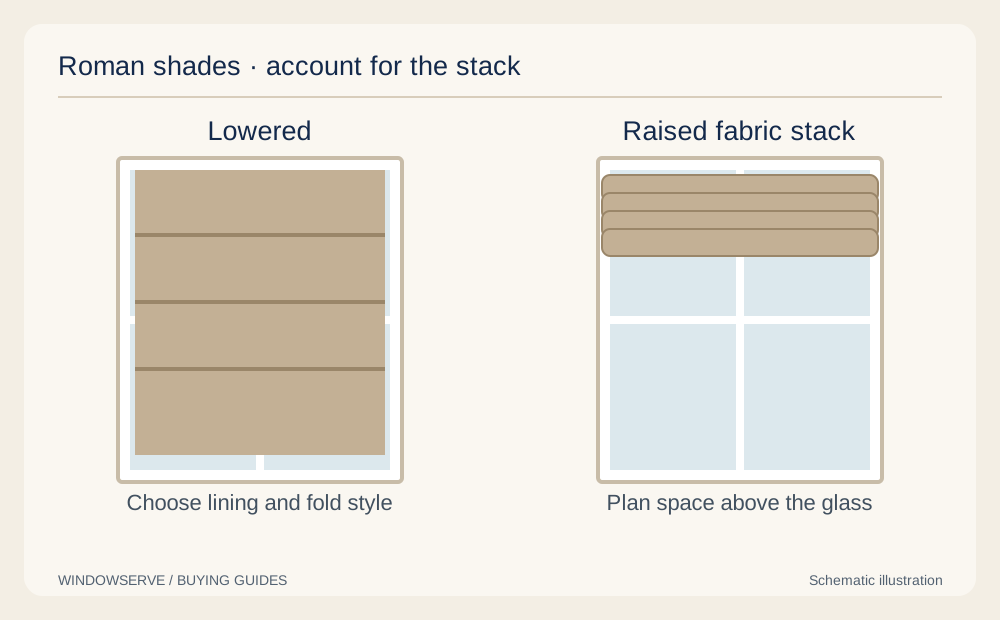
Roman folds occupy space when the shade is open. On a short window, that stack may cover a meaningful portion of the glass. Ask for the expected stack of the finished shade, not a generic estimate from a different sample size.
An inside mount can keep trim visible, but it must accommodate the headrail, folds, and operating clearances. An outside mount may let the stack sit above more of the glass if suitable wall space is available. Check the room-facing projection as well as the mounting height, especially near cabinets, doors, and corners.
As a planning example, a dining room with modest-height windows and attractive trim might favor an inside mount visually, while the owner values maximum daylight when the shades are open. Reviewing stack height makes that tradeoff concrete. The answer could be a higher outside mount, another fold style, or a different treatment altogether.
Where Roman shades make sense
Roman shades can suit rooms where fabric texture and a finished appearance matter, such as dining rooms, living spaces, or bedrooms with a suitable light-control package. They also work as part of a coordinated design with drapery, provided the two treatments have room to move.
Be more selective near a kitchen sink, cooking area, or frequently splashed bathroom window. A textile selected for appearance is not automatically resistant to moisture, grease, or staining. Check material suitability and required clearances from heat sources instead of assuming all custom shades tolerate the same conditions.
For a high-use door, think about what happens when the door opens and whether the fabric, stack, or bottom rail will move into the traffic path. A beautiful window treatment can become inconvenient if it must be adjusted every time someone passes through. Compare a roller shade or another door-appropriate product when a compact operating profile matters more than folds.
Controls, access, and safety
Try the operating system before buying, particularly with a substantial fabric or a tall window. Check whether you can reach the bottom rail without leaning across furniture and whether the folds need any product-specific handling. Ask which controls are available for the finished size and weight.
Motorization may make a group of shades or an awkward window easier to use. Specify whether you want individual control, a room group, or connected schedules. Charging access and motor compatibility need to be settled alongside the fabric choice, because not every combination is available.
CPSC recommends cordless coverings in homes where children live or visit. Evaluate the complete finished assembly. Our motorized blinds and shades guide covers control and power questions to resolve before ordering.
Choose care requirements you can maintain
Care can be a deciding factor for Roman shades because folds and decorative fabrics need attention. Ask for written instructions for both the face fabric and assembled treatment. A material label that sounds washable does not establish that the complete shade, lining, and hardware can be washed together.
Graber advises professional care for decorative fabric treatments; see its cleaning guidance.
Before choosing a delicate texture, consider dust, nearby cooking, pet contact, and how easy the window is to reach. Keep a record of the fabric and lining identifiers. If a stain occurs, check the instructions before applying water, steam, or a household cleaner that could leave a ring or change the fabric's appearance.
Also ask about service access: can the treatment be removed for approved professional care, who should remove it, and how would a damaged operating component be repaired? Maintenance becomes easier when these questions have clear answers at purchase.
What changes a Roman shade quote?
Dimensions, fabric selection, pattern matching, fold construction, lining, decorative details, and controls all influence scope. A simple fabric with a manual lift is not directly comparable with a large patterned shade, custom lining, and motorized operation.
Compare quotes using the same window dimensions and specification. Ask whether measurement, mounting hardware, installation, control accessories, and any necessary preparation are included. If the budget needs adjustment, discuss which choice has the greatest effect on appearance or function before removing features at random.
- Request a working example of the selected fold.
- Approve the face fabric and lining together.
- Review seams, pattern direction, and alignment across adjacent windows.
- Confirm the raised stack and mount location.
- Record the lift system and care instructions.
This checklist is particularly helpful when several rooms use related fabrics but need different levels of privacy.
Make the final decision in your own light
A consultation is most useful when you can show how the room is used. Point out where people sit, what can be seen from outside, and how much of the view you want to retain. Mention furniture changes and planned drapery so the finished layers can be considered together.
WindowServe helps Des Moines metro homeowners compare Roman shade fabrics and options for their actual windows. Schedule a free in-home consultation to review fold styles, lining, mounting, and controls before committing to a custom order.
Common questions about roman shades
Are Roman shades the same as roller shades?
No. Roman shades lift into folds, while roller shades wrap around a tube. The different construction affects appearance, raised stack, mounting space, and how a pattern looks as the shade moves.
Can Roman shades have blackout lining?
Compatible products may offer a room-darkening or blackout lining. Confirm availability for the chosen fabric and style, then discuss edge gaps. An opaque lining alone does not guarantee a completely dark room.
Are Roman shades suitable for a bathroom?
Suitability depends on the fabric, humidity, splash exposure, and care requirements. Ask about the exact material and location. Do not assume a decorative textile is suitable for direct shower spray or frequent moisture.
Will a Roman shade block part of the window when raised?
The gathered fabric occupies space at the top. Ask for the expected stack for your finished shade and check the proposed mount location. A higher outside mount may preserve more glass where the wall and product allow it.
Compare options in your own home
WindowServe offers free in-home consultations in the Des Moines metro, with professional measuring and installation for your project. Bring your questions about privacy, light, materials, and fit; we can compare options at your windows.
Request a free consultationSources and product details
Manufacturer references explain particular products and options. Availability, care instructions, and warranty terms depend on the product selected.