WindowServe buying guides
Pleated Shades: Fabric, Privacy, and the Difference from Cellular
Pleated shades bring crisp fabric folds to the window without the fuller drape of a Roman shade. They can be appealing when pattern and texture are central to the room, but their appearance can lead to confusion with cellular shades. Understanding the construction first makes the fabric, privacy, and control decisions much easier.
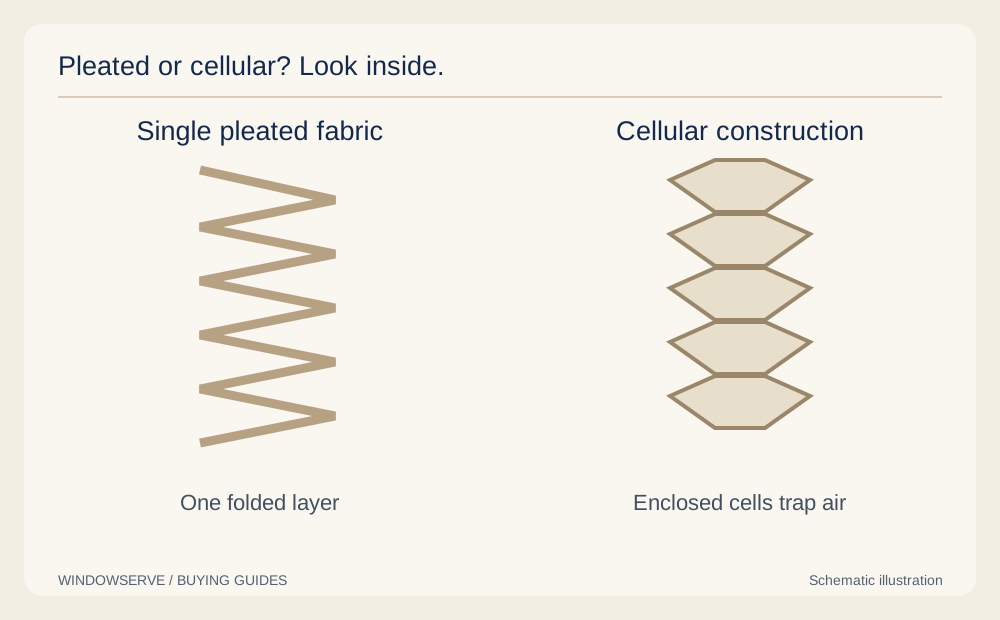
The short answer
Choose pleated shades when you like an accordion-fold fabric appearance and want to compare decorative fabrics with suitable privacy or light-blocking options. They are not the same as cellular shades: the latter have enclosed cells designed to trap air. Decide how much privacy you need before choosing a fabric, then check whether a liner changes its appearance. Confirm control availability and the required mounting space for your exact window size.
Before you choose
- Pleated and cellular shades can look similar from the front but have different construction.
- Choose fabric and liner as a combination; a decorative fabric alone may not provide the privacy you need.
- Test the shade's appearance when backlit and partially raised, not only as a flat sample.
Pleated shades versus cellular shades
A standard pleated shade uses folded fabric with an accordion-like profile. A cellular shade forms enclosed honeycomb-shaped chambers instead. Graber identifies this structural difference as the main distinction between the two and explains that the cellular chambers hold air. Read Graber's construction comparison.
Do not assume a pleated shade offers the same insulating performance simply because the front looks similar. If insulation is a central reason for replacing your window coverings, compare the specifications of the actual products and read our cellular shades guide. Avoid choosing from a category label or an unsupported savings promise.
For a room where the decorative fabric is the priority, pleated shades deserve a closer look. Hold a sample vertically against the window and view it from across the room. The fold pattern, color, and daylight together create the finished effect, so a small flat swatch tells only part of the story.
Select privacy first, then the fabric and liner
Start by describing the room's use in plain language: a living room that should feel bright, an office that needs privacy from a walkway, or a bedroom that needs stronger light control. These are different goals, even if all three rooms use the same wall color.
Graber offers pleated fabrics with privacy and blackout liner options. Its privacy liner allows diffused light and may show silhouettes. Review the light and privacy options. Treat the fabric and any liner as the sample you need to approve, because backing can change how a pattern appears against daylight.
| Need | Ask to see |
|---|---|
| Soft daylight | The fabric backlit at a window, with its proposed liner if any. |
| Nighttime privacy | How the actual fabric-and-liner combination behaves with room lights behind it. |
| A darker bedroom | The light-blocking material plus the proposed edge and mounting details. |
| A visible decorative pattern | The pattern at full pleat scale, viewed from the room's normal seating position. |
A light-blocking liner does not remove every path around the installed shade. For demanding darkness needs, ask about side gaps and the headrail area as part of the full specification. Our blackout shade guide explains that distinction.
Choose a pleat size that suits the opening
The pleat changes the rhythm of the fabric across the window. Graber currently lists 1-inch and 2-inch options, including versions with back support. Check its pleat choices. Compare physical samples rather than assuming a larger window must use the largest fold.
On neighboring windows, look at how the pleats relate to one another. If some shades will normally be half raised, consider that everyday view as well as the fully lowered arrangement. Ask about the size of the raised stack and how much glass it will cover. Those details depend on the product and finished height.
If you want a softer, more draped fold instead of crisp repeated pleats, compare Roman shades. If you prefer an uninterrupted fabric surface while lowered, include a roller shade in the comparison.
Match the controls and mount to the way you live
A manually operated cordless shade requires comfortable access to the rail you move. Before ordering, stand where a sofa, desk, or kitchen counter will be and rehearse that motion. If the location is difficult to reach, discuss a suitable powered system rather than assuming you will be happy stretching over furniture every day.
Graber lists cordless and motorized pleated shades, along with configurations that can lower from the top. Compatibility depends on the selection and dimensions. Confirm the current control options. For powered operation, our motorized window treatment guide covers the questions to ask about power and control.
Where children may be present, choose cordless coverings. CPSC identifies cordless as the safest choice for young children.
For installation, check mounting depth, the fixing surface, and projecting handles. An inside mount keeps the surrounding trim visible; an outside mount requires planning the overlap and position around it. Request the mounting drawing before ordering if the recess is shallow or the window has unusual hardware.
Consider the room and cleaning routine
A patterned pleated shade can be worth comparing in a living room, dining area, or office where you want a fabric accent. For a kitchen or bathroom, describe splashes, steam, and cooking residue before selecting a material. Fabric appearance does not establish that it is suitable for a damp or hard-to-clean location.
Graber lists dusting and vacuuming for pleated shades; check its care chart.
What to confirm on the quote
The cost of a pleated shade depends on the dimensions, fabric, liner, operating system, and installation requirements. Additional controls or a more involved mounting arrangement can change the total. Compare a complete specification instead of comparing a basic fabric price with an installed quote.
- Name the exact fabric, pleat size, and liner.
- Confirm privacy and light-control expectations in the actual room.
- Check control access and whether the desired options work together.
- Review mounting position, raised stack, and remaining edge gaps.
- Ask about care, warranty terms, and service arrangements.
A free WindowServe consultation in the Des Moines metro can help you compare samples at your own windows and decide whether pleated, cellular, or another shade best fits the room. Explore the shade collection for the wider range of choices.
Common questions about pleated shades
Are pleated shades and honeycomb shades the same?
No. A pleated shade has an accordion-fold appearance, while a honeycomb or cellular shade has enclosed cells. Look at the side profile or product specification when comparing similar-looking samples.
Do pleated shades provide privacy at night?
It depends on the fabric and liner. Evaluate the exact combination with light behind it; some selections can show silhouettes. Discuss the outside sightline and any gaps around the installed shade.
Can pleated shades be motorized?
Some current collections offer motorized configurations. Confirm compatibility with your fabric, size, and desired shade style, along with the power source and control method.
Should I choose pleated or cellular shades?
Compare pleated shades when the decorative fabric and crisp fold are central to your choice. Include cellular shades when insulation is a major priority. In either case, verify the actual privacy, controls, and fit for your window.
Compare options in your own home
WindowServe offers free in-home consultations in the Des Moines metro, with professional measuring and installation for your project. Bring your questions about privacy, light, materials, and fit; we can compare options at your windows.
Request a free consultationSources and product details
Manufacturer references explain particular products and options. Availability, care instructions, and warranty terms depend on the product selected.