WindowServe buying guides
Choosing Waterproof Shutters for Bathrooms and Damp Rooms
A bathroom window beside a shower faces a different problem from a window across the room. Both may be described as damp, yet only one receives repeated direct spray. Choosing bathroom shutters starts with that distinction. This guide explains how to evaluate moisture claims, privacy, cleaning, and fit without assuming every white composite or poly shutter is waterproof.
The short answer
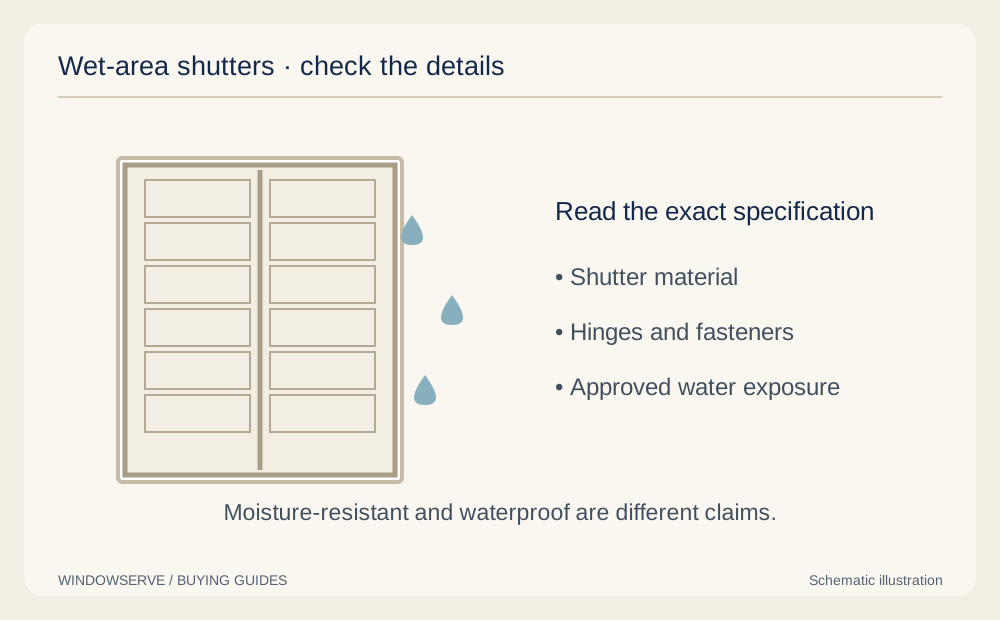
Choose bathroom shutters by matching the exact product to the exposure: occasional humidity, condensation, splashes, or repeated direct water contact. Moisture resistance and an explicitly offered waterproof configuration are not interchangeable. Ask for written confirmation covering the complete shutter assembly, its installation location, and care requirements. Then check nighttime privacy and window access. A waterproof material does not make the surrounding window, wall, hardware, or installation a waterproof enclosure.
Before you choose
- Describe actual water exposure before choosing a shutter material.
- Verify the exact waterproof option; a family name or poly label is not sufficient.
- Inspect nighttime sightlines, opening clearance, and cleaning access before ordering.
Start with the water the window actually encounters
Stand at the window and describe what happens during normal use. Does water strike the treatment directly? Does condensation collect on the glass or sill? Is there occasional splashing from a basin? Does the room simply become humid and then dry out? These conditions should be explained separately during product selection.
A window above a freestanding tub may be outside the splash zone in one layout and repeatedly wet in another. The name of the room alone does not tell the installer enough. Include how the showerhead is directed, how the window opens, and whether a towel or curtain regularly touches the area.
Photographs help, but describe the behavior too. A clean, dry photograph taken hours after a shower may hide the condition that matters most to the choice of material.
Waterproof and moisture-resistant mean different things
A product described as moisture-resistant is not automatically approved for repeated direct water exposure. “Composite” and “poly” also describe broad material categories, not a universal installation rating. The louvers, frame, rails, hinges, and finish may have different limitations.
For a specific example, Norman’s Woodlore Plus page describes a hybrid construction and separately identifies a waterproof option for locations with possible prolonged water exposure. The existence of that option is a reason to verify the ordered configuration rather than treating every Woodlore Plus shutter as identical.
Ask the supplier to show the product designation on the quote and confirm its suitability for your location in writing. Marketing language is only useful when it maps to the actual product being measured, ordered, and installed.
Compare the complete assembly, not just one component
A sample louver is useful for judging color and feel, but it does not tell you everything about the finished shutter. Ask what the rails and frame are made from, how cut edges are handled, and which hardware is supplied for the intended environment. Do not assume a water-resistant face makes hidden components suitable for the same conditions.
Graber describes its composite shutters as suited to moisture and high-humidity spaces. That is a useful product-specific statement, but it should not be expanded into a promise about direct shower spray or submersion. Clarify your application with the supplier.
If you prefer stained wood, be especially clear about exposure and maintenance expectations. Review the actual manufacturer’s guidance instead of choosing a finish first and assuming the installation location will be acceptable.
Check the window and room before covering them
A new shutter does not repair a leaking window or solve persistent condensation. If you see peeling paint, swollen trim, staining, or recurring dampness, investigate the condition before installing a covering over it. Product selection and the condition of the opening are separate decisions.
Also consider ventilation and drying access. Can the window still open after the shutter is fitted? Can you wipe the sill and reach the glass without removing fixed components? If a frame would cover a problem area, pause to understand it rather than treating the frame as a cosmetic repair.
For a bathroom renovation, coordinate the order with the final tile, trim, and window details. A shower enclosure or new faucet can change both the water exposure and the space available for a panel to open.
Test bathroom privacy from the relevant angles
Privacy depends on the view through the installed treatment, not the material label. Think about people outside at different heights: a nearby path, a neighboring deck, or an upper-floor window can each create a different sightline. Review the louvers both partly open and fully closed.
After-dark privacy deserves its own check because the room may be brightly lit while the exterior is dark. Do not assume a comfortable daytime setting is enough for evening use. If privacy is essential across the full window, a café layout that leaves upper glass uncovered may be inappropriate even when it looks appealing.
Consider where you stand and move inside the room. A shutter that screens the vanity area may leave a view toward the shower from another angle. Describe the whole room use during the consultation.
Choose a layout you can operate and clean
Bathroom windows often sit behind a basin, above a tub, or inside a deep tiled recess. These locations can make opening panels difficult. Check where the panel will swing and whether a tap, mirror, towel rail, or light fitting blocks it. Include the space needed for your hand to reach a control.
Louver movement also needs clearance. A small window can still have a projecting handle that conflicts with the selected shutter depth. Ask for a demonstration of the proposed profile and how the window lock remains accessible.
For example, two smaller panels may be worth discussing above a wide basin where one large panel would sweep across the faucet. This is a layout question, not a universal prescription. The correct arrangement depends on the actual opening and permitted product dimensions.
Follow the care instructions even for a waterproof option
Water exposure approval does not automatically authorize steam cleaning, abrasive pads, bleach, or every bathroom spray. Use the care instructions supplied with the selected shutter and finish. Keep cleaning products off components unless the manufacturer specifically permits them.
Graber's cleaning chart lists shutter care separately; follow your product instructions.
During the consultation, ask how to remove ordinary surface dust and how to handle residue from splashes. Also ask how to reach the back of the louvers and the sill. A product that meets the room’s material requirements still needs an accessible, realistic maintenance routine.
Bathrooms, laundry rooms, and sunrooms need different questions
In a bathroom, direct water and privacy may lead the discussion. In a laundry room, check proximity to a utility sink, the route for baskets, and access to the window. In a sunroom, discuss the actual exposure and product limits rather than assuming indoor use alone resolves every concern.
A window close to a frequently used sink may need a different specification from one across the same room. Similarly, a room described as a sunroom may be conditioned like the rest of the house or may experience different conditions. Tell the supplier how the space is used through the year.
Choose from shutters and other appropriate treatments by room requirements. If you are comparing a slatted blind, our faux wood blind guide explains a different format; verify its own material and cleaning limits independently.
Questions to put on the quotation
- What is the exact product line and moisture-related option being ordered?
- Is it approved for this specific amount and type of water exposure?
- Does the approval cover the frame, rails, louvers, and supplied hardware?
- What installation and cleaning conditions must be followed?
- How do the written warranty terms address this application?
- Can the panels open and the window operate after installation?
- What preparation of the sill, trim, or tile is required beforehand?
Keep the answer with the order paperwork. A verbal description such as “bathroom shutters” is too vague to resolve a later question about which configuration was intended. If a supplier cannot confirm suitability for a wet location, compare a different approved product or change the placement rather than relying on an assumption.
Plan around your room, not a generic waterproof claim
For a Des Moines home, bring photographs of the window, surrounding fixtures, and any visible condensation or splash pattern to the discussion. If remodeling is planned, include the final layout. This lets product choices follow the actual conditions instead of a broad room label.
WindowServe can help compare options during a free in-home consultation. Start with the shutter collection, then use the plantation shutter guide for louver and frame decisions. The aim is a suitable, clearly specified treatment with practical privacy and access—not simply a product carrying a reassuring word.
Common questions about waterproof shutters
Are all composite shutters waterproof?
No. Composite is a broad construction category. Some products are described as moisture-resistant, while a particular line may offer a separate waterproof configuration. Verify the exact product and approved exposure rather than assuming the terms mean the same thing.
Can shutters go inside a shower window?
Only consider a product specifically confirmed suitable for the actual direct-water exposure and installation. Ask the supplier for written product and warranty guidance. The shutter does not waterproof the surrounding window, sill, wall, or enclosure.
Can I spray bathroom cleaner on waterproof shutters?
Do not assume so. Water suitability and chemical compatibility are separate issues. Follow the care instructions for the exact material, finish, and hardware, and ask the supplier before using a cleaner that is not listed.
Will waterproof shutters fix window condensation?
No. They are a window covering, not a repair for the conditions causing condensation or leaks. Investigate recurring moisture and keep the window accessible for cleaning and inspection before selecting the final treatment.
Compare options in your own home
WindowServe offers free in-home consultations in the Des Moines metro, with professional measuring and installation for your project. Bring your questions about privacy, light, materials, and fit; we can compare options at your windows.
Request a free consultationSources and product details
Manufacturer references explain particular products and options. Availability, care instructions, and warranty terms depend on the product selected.