WindowServe buying guides
Vertical Blinds for Sliding Doors and Wide Windows
A sliding door needs a window covering that works with movement through the opening. Vertical blinds offer two useful adjustments: rotate the hanging vanes to change light and privacy, or draw them aside for access. The most important buying decisions are often where the vanes stack and whether the controls fit your daily route through the room.
The short answer
Vertical blinds are worth comparing for sliding glass doors and broad windows when you want adjustable privacy plus sideways opening. Start with the active door panel, choose where the vanes will stack, and check handle and floor clearance. Then compare vinyl, fabric, or sheer constructions using real samples. The chosen material affects appearance and care, while the installed overlap and gaps determine how well the whole treatment meets your privacy and light-control needs.
Before you choose
- Choose the stack location around the door you use, not just the center of the opening.
- Check material opacity separately from the label “vertical blind.”
- Measure the complete movement path, including handles, vanes, flooring, and controls.
How vertical blinds work
Vertical blinds suspend individual vanes from a track. Rotating the vanes adjusts the angle of the view through them; traversing the track gathers them toward a designated side or sides. That gives you a way to change privacy without moving the entire covering every time.
They are a different design from a roller shade above a door. Before comparing colors, decide whether sideways movement fits how you use the opening. Picture carrying groceries through, letting the dog outside, opening the screen, and reaching the handle. A treatment that looks good closed also needs a convenient place to go when the door is in use.
Manufacturer ranges differ in track and vane options. Graber offers fabric, sheer, and vinyl vertical constructions. Review Graber's vertical blind range. Bring the whole assembly into the comparison: the headrail, control, vanes, valance, and proposed mounting position all contribute to the result.
Choose stack direction before choosing color
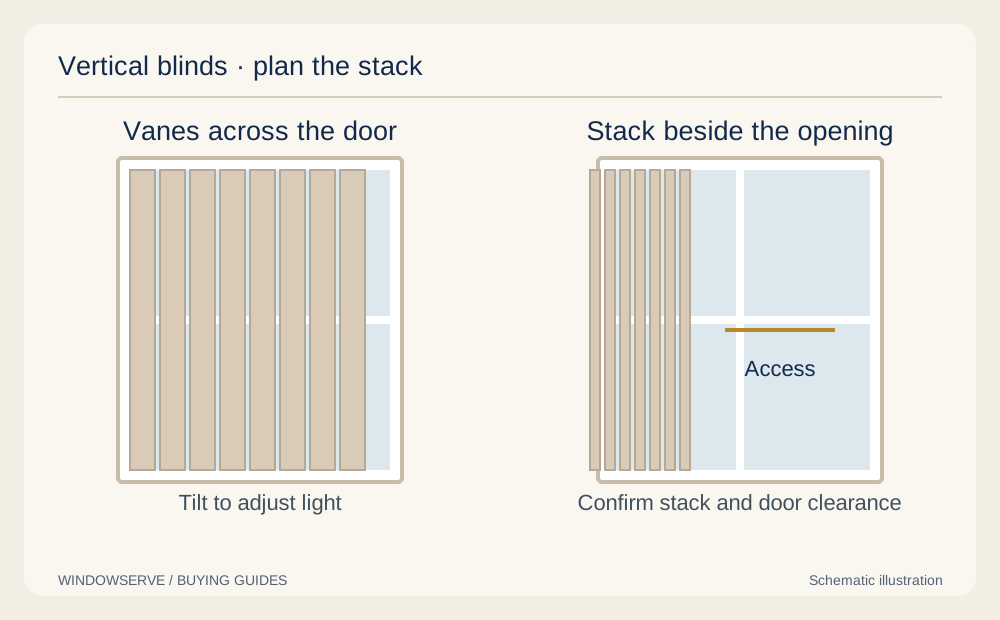
Identify the door panel that opens and the path people take through it. Ask for a drawing of the blinds fully closed and fully open. The drawing should show where the stacked vanes sit relative to the active door panel, adjacent glass, furniture, and available wall space.
One-way draw
A one-way arrangement can make sense when you want the vanes gathered away from the usual entry point. Check which side the selected system can use and where the wand or other control will sit. The best-looking side may not be the side that is easiest to reach.
Split draw
Drawing toward both sides can suit a symmetrical opening, but there are then stacks on both sides. Confirm that those stacks will not crowd the handle, passage, or adjoining furniture. Do not choose split draw solely because it looks balanced in a catalog photograph.
Stack space beyond the glass
Ask whether the track can extend beyond the opening to place more of the stack outside the glass area. That depends on the mounting surface, nearby walls, and the system's specifications. Request the expected stack dimension for the actual order; there is no single allowance that fits every width and material.
Compare vane materials by appearance and use
| Material or construction | What to compare in person |
|---|---|
| Vinyl vanes | Surface texture, finish, closed-slat appearance, and approved cleaning methods. |
| Fabric vanes | Weave, opacity, edge finish, and whether the sample meets your nighttime privacy goal. |
| Sheer vertical construction | How the sheer and opaque elements look in both open and closed positions. |
Graber lists fabric choices ranging from sheer to room darkening and vinyl choices with smooth or embossed surfaces. See its material and vane options. These labels narrow the comparison, but a sample viewed against the actual window is more useful than choosing from a swatch on a desk.
Look at the sample from the sofa and from the entrance to the room. Large repeated surfaces can make a texture more noticeable than it appears on a small chip. Compare the vanes with nearby curtains or shades if the room contains both a patio door and ordinary windows; coordination does not require every opening to use the same product.
Plan for privacy, glare, and remaining light
The angle of the vanes can change the view into and out of a room, but your needs may differ by time of day. A patio door facing a private yard and one facing a shared walkway call for different privacy checks. Evaluate the room with interior lights on before deciding that a daylight sample is sufficiently private.
For a television room, note the sun's position at the time you watch. You may be able to adjust the vanes to reduce a distracting view of bright glass while leaving some daylight. This is a practical test to perform in the room, not a reason to assume any vertical blind will eliminate glare in every position.
Opaque material does not automatically make the complete installation blackout. Overlaps between vanes and gaps at the floor, track, and sides still matter. If strong room darkening is essential, discuss the complete coverage arrangement and compare other suitable door treatments. Our blackout guide explains why the fabric and installation must be considered together.
Measure the movement path, not just the glass
During measurement, open the door fully and show how the screen operates. The vane rotation must clear handles and other projections. The headrail needs an appropriate fixing surface, and the valance, if selected, needs room beside walls or cabinetry.
Floor clearance should account for the actual finish beneath the vanes, including a rug that may sit nearby. Do not order a universal gap from an online example: the manufacturer and installer should establish the clearance for the selected system. Too much coverage at the wrong place can interfere with operation, while too little can leave an unintended view below the treatment.
- Identify the active door panel and any secondary panel you occasionally open.
- Show the installer the handle, lock, screen, and full door travel.
- Mark where furniture and floor coverings will remain.
- Confirm track location, stack side, stack space, and control position.
- Ask how the treatment will be removed or serviced if necessary.
Also review how a person reaches the door during an ordinary busy moment. If using the blind requires stepping behind furniture or leaning around the stack, revisiting the layout now is easier than living with that restriction.
Choose controls you will use comfortably
A wand can combine the daily operations in one reachable control. Graber's One Touch wand both rotates the vanes and draws the blind. Check its control details and availability. Try the intended action and ask the installer to demonstrate the correct sequence for the selected system. If something catches, stop and identify the obstruction instead of pulling harder.
Choose cordless coverings for places children may use. CPSC recommends cordless as the safest option around young children. Confirm that the actual product ordered meets that requirement rather than relying on a photograph with its controls out of view.
Graber distinguishes fabric from vinyl verticals in its product-specific care chart.
Compare a complete door solution
The quote should state the opening dimensions, track and control system, material, stack arrangement, headrail finish or valance, mounting work, and installation. Compare these details before comparing totals. Repair access and replacement components can also matter on a heavily used door, so ask how service would work.
If you prefer a fabric treatment, compare custom drapery with enough space for its stack. If the door is rarely used, your priorities may differ from a main patio entrance. Let the daily use determine the shortlist rather than trying to match another room's covering at all costs.
For a Des Moines metro patio door or wide window, a free WindowServe in-home consultation can help resolve the stack direction, samples, and clearance questions together. View the blinds collection for the other styles available to compare.
Common questions about vertical blinds
Which side should vertical blinds stack on?
Usually the starting point is the side that keeps the active doorway convenient to use, but the available wall space, control position, and system options matter. Ask for a drawing that shows the actual open stack before ordering.
Are vertical blinds only for sliding doors?
No. They can also be considered for broad windows. Compare their sideways operation and vertical pattern with the way you want to use and view the opening.
Can vertical blinds provide nighttime privacy?
That depends on the vane material, overlap, angle, and edge coverage. Inspect the selected material against light and discuss the outside sightline with the room lights on. A sheer selection should not be assumed to provide full privacy.
Can a damaged vertical blind vane be replaced?
It may be possible, depending on the product, attachment design, and continued availability of the material. Ask about replacement parts when choosing the system and retain the original order details.
Compare options in your own home
WindowServe offers free in-home consultations in the Des Moines metro, with professional measuring and installation for your project. Bring your questions about privacy, light, materials, and fit; we can compare options at your windows.
Request a free consultationSources and product details
Manufacturer references explain particular products and options. Availability, care instructions, and warranty terms depend on the product selected.