WindowServe buying guides
Valances and Cornices: Choosing the Right Top Treatment
A top treatment can connect a window to the rest of a room, conceal selected hardware, or add fabric without full-length drapery. It can also cover more glass than intended or interfere with a shade if the dimensions are chosen too quickly. This guide explains how to compare valances and cornices and plan their fit.
The short answer
Choose a valance when you want a soft fabric accent, or a cornice when a defined, structured top edge suits the room. Confirm the product’s construction because terminology varies and some blind valances are rigid. Plan the width, drop, and projection around the treatment beneath it, leaving room for movement and service access. Neither a typical valance nor a cornice provides full-window privacy; that job belongs to the blind, shade, shutter, or drapery below.
Before you choose
- A soft valance and a rigid cornice create different effects, but product naming is not universal.
- Check projection and service access as carefully as width and decorative drop.
- A top treatment usually finishes another covering rather than replacing its privacy function.
What is the difference between a valance and a cornice?
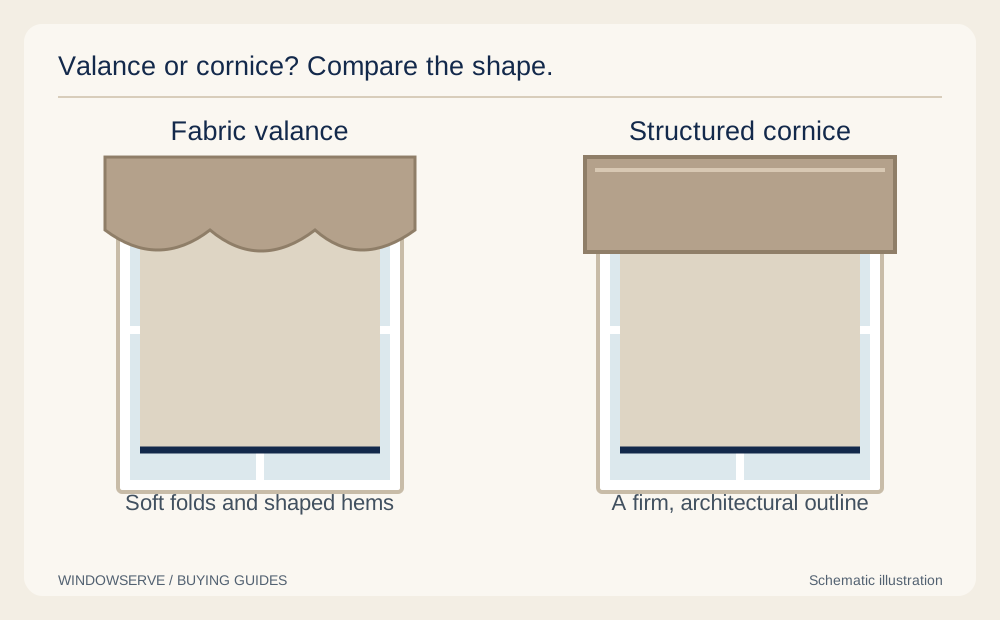
In a soft-furnishing discussion, a valance commonly means a short fabric treatment across the top of the window. A cornice usually has a rigid structure, which may be finished in wood or covered with fabric. The construction matters more than the name alone.
Hunter Douglas describes a valance as a fabric accent, while Graber also offers wood valances. This difference in terminology is why you should ask to see a sample or construction drawing.
A soft treatment can introduce folds and pattern. A rigid treatment produces a more defined outline. Choose the form that relates to your room’s trim, furnishings, and the covering beneath it.
Give the top treatment a specific job
Start with the reason for adding it. You may want to conceal a utilitarian headrail, repeat a fabric used elsewhere, frame a group of windows, or create a more finished transition above a shade. Knowing the purpose helps you judge whether another layer improves the room.
If the existing treatment already has an attractive cassette or decorative headrail, an additional cover may be unnecessary. Compare the window with and without it before committing. A small sample board or a paper outline can help reveal whether the proposed addition feels balanced.
Keep privacy and light control separate. A typical top treatment covers only an upper portion of the window, so it does not replace a full covering where those functions are needed.
Check the width and drop against the actual window
The drop is the visible height of the top treatment. A deeper drop creates a different effect from a shallow band and may cover more glass. Judge it from the usual sitting position as well as from the doorway, especially in a small room.
Mark a proposed outline with a removable paper template. Review how it aligns with the window trim and adjacent openings. If windows are at different heights, decide whether a common top line is useful or whether each opening should follow its own proportions.
There is no need to apply one percentage of window height to every room. The aim is to frame the window while retaining the light and view you want.
Leave enough room for the treatment underneath
Projection is how far the top treatment extends from the wall or mounting surface. It must account for the headrail, brackets, and any fabric moving underneath. A front view can hide conflicts that become obvious in a side view.
Check the shade fully raised and lowered, then check any drapery in motion. A folded Roman shade or gathered drapery can need more space than it appears to need while extended. Handles and controls must also remain accessible.
Ask how a shade, motor, or bracket could be serviced after the top treatment is installed. A removable cover or planned access can be useful, but the detail depends on the actual system. Do not approve a design that can only be assessed in its closed display position.
Coordinate materials without making every surface match
A fabric valance can repeat a color from a rug or chair without using the identical pattern. A wood or painted cornice can relate to trim while remaining a deliberate accent. Compare samples against the room’s permanent finishes before matching temporary accessories.
Pattern scale deserves attention on a short treatment. A large motif may be cropped in an awkward place or appear differently when folded. Ask how the repeat will be positioned across the front and returns. For an upholstered cornice, discuss how seams and corners will be handled.
For coordinated full-length panels, use the custom drapery guide to plan the fabric and heading as part of the same design.
Think through common room situations
Kitchen window: a short top treatment can add pattern without fabric near the floor, but check its relationship to the sink, splashes, and window operation. Choose care requirements you are comfortable maintaining.
Living room: compare the top treatment with existing crown molding and artwork. Adding several strong horizontal lines can become visually busy. A simple outline may give the shade the finish it needs without competing with the room.
Bedroom: if light control is the main reason for the purchase, prioritize the complete shade or drapery installation. A decorative top cover alone does not resolve side gaps, center gaps, or insufficient fabric coverage.
Confirm support, cleaning, and future access
A rigid cornice needs a suitable mounting plan for its construction and size. Ask the installer to confirm the brackets, mounting surface, and any interaction with the hardware beneath it. Avoid assuming an existing curtain bracket is suitable for a different assembly.
Review Graber's fabric care guidance before choosing a treatment near cooking residue.
Keep access in mind if you anticipate replacing a shade later. Ask what can be removed independently and which dimensions a future replacement would need to respect. This makes the design easier to maintain without guessing about disassembly.
What to confirm before ordering
- The actual construction: fabric, upholstered rigid form, or finished wood.
- The outside width, visible drop, return depth, and mounting position.
- Clearance with every underlying treatment fully operated.
- Pattern placement and coordination with adjacent windows.
- Mounting, removal, cleaning, and service access.
- Whether the quote includes all brackets and installation.
Explore WindowServe’s drapery and hardware collection. During a free in-home consultation in the Des Moines area, you can compare top-treatment proportions with the actual window and surrounding furniture. Bring a photograph of any existing headrail you want to cover so the design begins with the right dimensions.
Common questions about valances & cornices
Are valances always made of fabric?
No. In soft furnishings, the word often means a short fabric treatment, but blind manufacturers also use valance for rigid wood or other headrail covers. Confirm the construction and intended use of the specific product.
Can I add a cornice over an existing shade?
Possibly, if there is suitable mounting and enough space for the headrail, controls, and moving fabric. Check the shade fully raised and lowered and plan how it can be accessed for service before ordering.
Will a valance provide privacy?
A typical valance covers only the top portion of the window and leaves the rest exposed. If privacy is needed, pair it with an appropriate blind, shade, shutter, or functioning drapery.
How tall should a valance or cornice be?
Use the actual window, mounting location, room proportions, and desired exposed glass to decide. A paper outline is helpful for judging a proposed drop. One fixed percentage does not suit every window or design.
Compare options in your own home
WindowServe offers free in-home consultations in the Des Moines metro, with professional measuring and installation for your project. Bring your questions about privacy, light, materials, and fit; we can compare options at your windows.
Request a free consultationSources and product details
Manufacturer references explain particular products and options. Availability, care instructions, and warranty terms depend on the product selected.